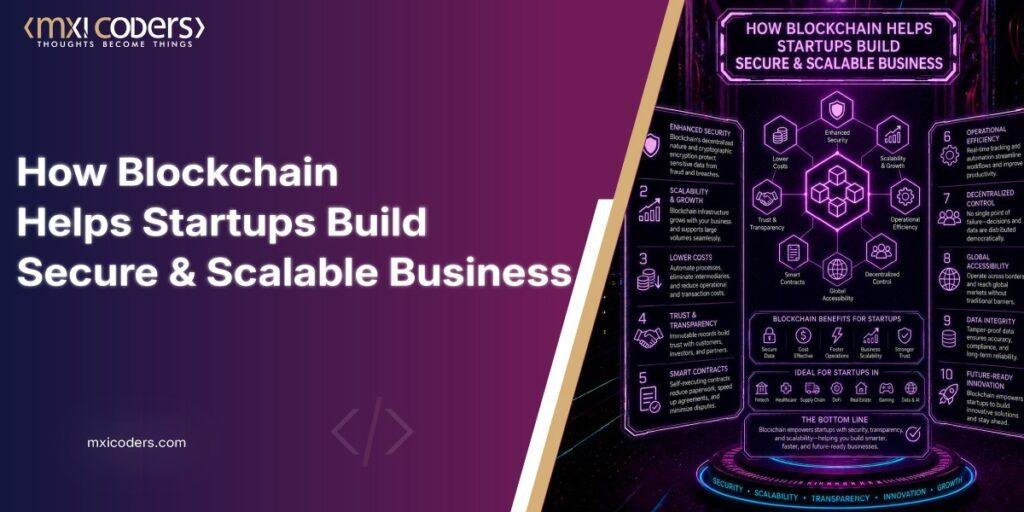
Startups live or die on trust. A founder can have the best product in the world, but if customers do not trust the platform with their money or data, growth stalls before it starts. Security and scalability are not optional extras for an early stage company, they are the foundation everything else is built on.
The numbers show why this matters right now. The global blockchain technology market was valued at close to 55 to 60 billion dollars in 2025 and is projected to grow past 100 billion dollars in 2026, with some forecasts placing it in the trillions by the early 2030s. Separately, Deloitte research found that 91 percent of business leaders expect a meaningful, verifiable return from their blockchain investments within five years, and around 60 percent of CIOs report their organizations are close to implementing blockchain in some form. That level of confidence is not accidental. It reflects a technology that solves two problems startups struggle with constantly: proving trustworthiness without a big brand name, and scaling operations without ballooning costs.
This guide breaks down what blockchain actually is, the specific security and growth challenges startups face, how blockchain addresses both, real industry use cases, and how to decide whether it is the right fit for your business right now.
➤ What Is Blockchain Technology?
➥ Simple Explanation for Startup Founders
At its core, blockchain is a distributed ledger that records transactions across many computers instead of one central server. Once a record is added, it cannot be quietly changed or deleted, which is what makes the system trustworthy by design rather than by policy.
- Definition of blockchain: a shared, digital record book that many parties can view but no single party fully controls
- Distributed ledger concept: data is copied and synced across multiple nodes instead of sitting on one company’s server
- Decentralization explained: no single entity has the power to unilaterally alter records or shut the system down
- Why it differs from traditional databases: conventional databases rely on a central authority for trust, while blockchain relies on consensus and cryptography
This is one of the reasons blockchain development for startups has moved from a niche interest to a serious strategic option for founders raising early funding rounds.
➥ Core Components of Blockchain
Every blockchain network, regardless of industry use case, is built from the same basic parts:
- Blocks: bundles of transaction data linked together in sequence
- Nodes: individual computers that store and validate copies of the ledger
- Consensus mechanisms: the rules nodes use to agree on which transactions are valid
- Smart contracts: self-executing code that runs automatically once conditions are met
- Cryptography: the mathematical layer that secures data and verifies identity
➤ Why Security Is a Major Challenge for Startups
➥ Common Security Risks
Early stage companies are attractive targets precisely because they often lack mature security infrastructure. The most common risks include:
- Data breaches from underprotected servers or third party vendors
- Identity theft through weak authentication systems
- Payment fraud during customer transactions
- Insider manipulation of financial or operational records
- A single point of failure that takes down an entire system if compromised
➥ How Security Problems Impact Growth
A single security incident can undo years of hard-won progress. Founders should understand the downstream effects:
- Customer trust erodes quickly and rarely returns to the same level
- Financial losses from fraud, downtime, or legal settlements
- Compliance issues that can trigger fines or restrict market access
- Brand reputation damage that follows a company well beyond the incident itself
➤ How Blockchain Improves Startup Security
➥ Immutable Data Storage
Once information is written to a blockchain, altering it requires changing every subsequent block across a majority of the network, which is computationally impractical. This gives startups:
- Records that cannot be altered easily after the fact
- Transparent audit trails that regulators and investors can independently verify
- Better data integrity across every transaction logged
➥ Decentralized Infrastructure
- Eliminates single points of failure that attackers typically target
- Increased resilience against outages and coordinated attacks
- Reduced cyberattack risks compared to centralized databases
Because data is distributed across many nodes rather than stored in one place, blockchain removes the classic weak point of centralized systems.
➥ Smart Contract Automation
Smart contracts remove the need for a trusted middleman by executing terms automatically once predefined conditions are met.
- Removes manual intervention from routine agreements
- Prevents execution errors caused by human oversight
- Builds trust between parties who may have never worked together before
Before deploying any smart contract in production, a thorough smart contract audit is essential, since even small coding flaws can be exploited to drain funds or manipulate outcomes.
➥ Advanced Cryptographic Protection
Cryptography is what actually makes decentralization safe rather than chaotic.
- Secure transactions verified mathematically rather than by a central authority
- Digital signatures that confirm the identity of the sender without exposing sensitive data
- Encryption benefits that protect information both in transit and at rest
Must Read: How to Develop a Blockchain MVP That Validates Your Business Idea
➤ How Blockchain Helps Startups Scale Faster
➥ Business Process Automation
Startups often run lean teams, which makes automation a competitive advantage rather than a nice-to-have.
- Smart contracts that handle recurring agreements without staff intervention
- Automated workflows across finance, compliance, and operations
- Reduced operational costs as manual processing is phased out
➥ Faster Transactions
Speed matters when a startup is trying to compete with incumbents who already have scale on their side.
- Real-time settlements instead of multi-day banking delays
- Cross-border payments processed without traditional intermediaries
- Lower transaction fees compared to legacy payment rails
Underlying network choice matters here. A Layer 1 blockchain handles transaction validation and security directly on its base network, while a Layer 2 blockchain processes transactions off the main chain and settles them in batches, dramatically improving throughput. Startups building high-volume applications often need to plan for both, along with gas optimization techniques that reduce the computational cost of executing transactions on-chain.
➥ Easier Partner Integration
Blockchain’s shared architecture simplifies working with outside partners, something most startups need to do constantly.
- Shared ledgers that all parties can view and verify independently
- API connectivity that plugs into existing software stacks
- Secure data sharing without exposing an entire internal system
➥ Global Expansion Opportunities
For startups eyeing international markets, blockchain removes several traditional barriers to entry.
- Borderless payments that do not depend on local banking infrastructure
- Token economies that create new incentive and loyalty models
- International customer access without setting up local financial entities
Choosing the right blockchain startup development partner early on can prevent costly rework later, especially once a company starts expanding into new regions or verticals.
➤ Blockchain Use Cases for Startups
➥ FinTech Startups
- Digital payments processed instantly across borders
- Lending platforms that use on-chain collateral verification
- Crypto exchanges built on secure, auditable infrastructure
➥ Healthcare Startups
- Patient data management with permissioned access controls
- Medical records stored with tamper-proof history
- Identity verification that reduces fraudulent claims
➥ Supply Chain Startups
- Product traceability from origin to end customer
- Inventory transparency shared across multiple stakeholders
- Vendor verification that reduces counterfeit risk
➥ SaaS Startups
- User authentication built on decentralized identity
- Secure subscriptions with automated billing logic
- Digital licensing that prevents unauthorized duplication
➥ Real Estate Startups
- Property tokenization that divides high-value assets into tradable shares
- Smart contracts that automate escrow and closing conditions
- Ownership verification that reduces title fraud
Tokenization in blockchain is proving especially valuable here, since it allows illiquid assets like real estate to be bought, sold, and transferred in fractional amounts. A well known example is the Solana tokenization use case, where startups have used the network’s high throughput and low fees to tokenize real world assets at a scale that would be cost prohibitive on slower networks.
➥ AI Startups
- Secure AI data sharing between organizations without exposing raw datasets
- Model verification that proves an AI system has not been tampered with
- Decentralized AI marketplaces where developers can trade models and data securely
These use cases show why demand for startup blockchain solutions continues to grow across industries that have little in common besides a shared need for verifiable trust.
➤ Is Blockchain Right for Every Startup?
➥ When Blockchain Makes Sense
- Multi-party systems where several stakeholders need shared visibility
- High-value transactions where trust and verification carry real financial weight
- Digital asset management involving tokens, NFTs, or fractional ownership
- Compliance-heavy industries such as finance or healthcare
- A genuine need for transparency that customers or regulators are demanding
➥ When Traditional Systems May Be Better
- Simple CRUD applications with no need for decentralized trust
- Small internal tools used only by a handful of employees
- Low transaction volume that does not justify the added infrastructure
- Centralized business models where a single trusted party is already accepted by all parties involved
Founders exploring custom enterprise blockchain development should weigh these factors carefully rather than defaulting to blockchain because it is a familiar buzzword.
➤ Conclusion
Blockchain strengthens startup security by making data tamper resistant and removing single points of failure, while supporting long-term scalability through automation, faster transactions, and easier partner integration. That said, blockchain should solve a real business problem rather than be adopted simply because it is trending in investor conversations. Founders considering scalable blockchain solutions should evaluate their business model, technical requirements, and growth plans before committing engineering resources and budget.
If you are unsure whether blockchain fits your roadmap, it is worth consulting a blockchain development team that can assess your specific use case, infrastructure needs, and long-term goals before you invest a single dollar.
➤ Frequently Asked Questions
1. What are the benefits of blockchain for startups?
Blockchain gives startups tamper-proof data storage, decentralized infrastructure that reduces single points of failure, automated smart contracts, and lower transaction costs, all of which help build customer trust faster than traditional systems.
2. Can blockchain help startups scale?
Yes. Blockchain supports scaling through automated workflows, faster cross-border transactions, easier integration with partners via shared ledgers, and access to global markets without traditional banking barriers.
3. Is blockchain expensive for startups?
Costs vary widely depending on whether a startup builds a custom solution or uses an existing platform. Public blockchain networks with high fees can be costly at scale, but Layer 2 networks and careful architecture choices can significantly reduce expenses.
4. Which startups benefit most from blockchain?
Startups in fintech, healthcare, supply chain, real estate, and any business involving multiple parties, high-value transactions, or compliance requirements tend to benefit the most from blockchain adoption.
5. How secure is blockchain technology?
Blockchain is highly secure due to its decentralized structure and cryptographic verification, though security still depends on proper implementation, including regular audits of any smart contracts deployed.
6. Do all startups need blockchain?
No. Startups with simple internal tools, low transaction volumes, or centralized business models where trust is not a major issue often do not need blockchain and may be better served by traditional systems.
Sources for Citation
- Grand View Research. Blockchain Technology Market Size Report, 2026-2033.
- MarketsandMarkets. Blockchain Market Report 2026-2031.
- DemandSage. Blockchain Adoption Statistics 2026.
- Precedence Research. Blockchain Technology Market Size to Exceed USD 2,379.53 Bn By 2035.
- Scoop Market. Blockchain Statistics and Facts By Technology (2026).
- Fortune Business Insights. Blockchain Technology Market Size, Share, Value.
- Coherent Market Insights. Blockchain Technology Market Size and Forecast, 2026-2033.