Build dApps That Actually Work

Most dApps fail at the wallet step. We build blockchain dApp and crypto wallet products that hold up where it matters real users.
Clutch Logo
4.9
Goodfirms Logo
4.9
Google Logo
4.9
Upwork Logo
4.9

Why Our DApp Development Services Are a Smart Investment

Efficient Decentralization

You get a system that cuts out unnecessary intermediaries, reduces operational friction, and gives you a transparent, secure foundation that’s easier to manage at scale.

Disruptive Innovation

Your business can launch solutions that break outdated workflows, open new revenue channels, and position you ahead of competitors still stuck on traditional centralized systems.

Seamless Accessibility

Our dApps development services ensure your users get fast, reliable access across devices, making adoption easier without adding complexity to your existing processes or teams.

Improved Efficiency

You reduce bottlenecks, automate critical steps, and streamline operations, helping your team deliver faster while maintaining accuracy and lowering long term operational costs.

Reliable Blockchain DApp Development Services for Your Business

DApp Mobile App Development

We create secure, fast, and user friendly mobile DApps that support smooth interactions and deliver a reliable Web3 experience.

Decentralized Exchange Development

We build secure trading platforms using blockchain dapp development to support high volume transactions, strong security, and long term scalability.

Crypto Exchange Integration

We integrate your systems with trusted crypto exchanges to simplify transactions, boost flexibility, and create smoother user experiences.

dApps Integration

We connect new DApps with your existing tools and workflows, ensuring everything works together without adding complexity.

dApp MVP Consulting

We help you shape a clear, practical MVP roadmap so you launch faster, reduce risks, and validate real product demand.

Hire Web3.0 Developer

Our experts provide web3 dapp development support to strengthen your team, accelerate delivery, and handle complex blockchain needs confidently.

Why Our Blockchain DApp Development Company Stands Out?

Full Stack Blockchain Expertise

We handle everything from smart contracts to front end and integrations, giving you a complete team that builds reliable, scalable DApps.

Long Term Development Partner

We stay involved beyond launch, supporting upgrades, new features, and continuous improvements so your product keeps growing without disruption.

Smart Contract Automation

We design automated smart contract workflows that cut manual effort, reduce errors, and keep your operations running smoothly and securely.

20+ Years of Experience

You work with seasoned dApps developer professionals who understand complex challenges and deliver stable, future ready blockchain solutions.

Ready to Partner with a Trusted DApp Development Company?

Work with the best blockchain dapp development company that builds secure, scalable solutions aligned with your business goals and helping you launch faster

Serving Solutions Across Diverse Industries

Our decentralized application development services deliver secure, scalable solutions across multiple industries. You get practical results that improve efficiency, reduce risks, and support growth.

20+

Projects Delivered

Real Estate

15+

Projects Delivered

Fleets

20+

Projects Delivered

FinTech

15+

Projects Delivered

Healthcare

15+

Projects Delivered

EdTech

10+

Projects Delivered

Hotels and Restaurants

20+

Projects Delivered

Gambling Lottery Betting

15+

Projects Delivered

Video Streaming App

20+

Projects Delivered

Retail and Wholesale

10+

Projects Delivered

AgriTech

Built with the Future in Mind: Our Tech Stack

Ethereum

Solana

Uniswap

Blockchain

Development Process of Our Dapps Development Company

01.

Requirement Analysis and Technology Selection

We define your goals, evaluate technical needs, and choose the best blockchain stack to support a stable and scalable product.

02.

Architecture Design and Prototyping

We map out the system structure and create a working prototype so you can validate functionality before development begins.

03.

Smart Contract Development and Testing

We build secure smart contracts and run strict testing to eliminate risks, ensure accuracy, and keep your operations protected.

04.

Frontend Development and Integration

We create a smooth, user friendly interface and connect it with your backend using custom dapp development services for reliable performance.

05.

Quality Assurance and Deployment

We verify every feature through detailed testing and deploy your DApp in a stable environment ready for real world use.

Deploy a Secure DApp with Our Trusted Development Services!

Work with a decentralized application development company that delivers secure, reliable DApps built to handle real users and long term business demands.

Mxicoders® Inc. completed the landing page and its functionalities. Everything was delivered swiftly and efficiently, and internal stakeholders were particularly impressed with the vendor's proactive approach to the partnership.

Arian Adeli

Founder, Discovery Dose

Showcasing Trusted Clients Who Achieved Results with Us

Showcasing Our Proud Portfolio of
Successful Projects
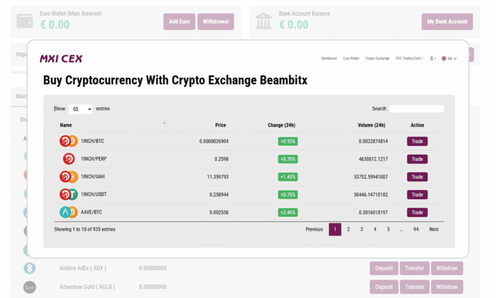
Real Estate Tokenization with Blockchain Technology

$2 billion - Tokenized property value in first year
35% Increase in market participation
20% Reduction in transaction costs
MXI Prop

MXI Clean: Promoting Sustainable Real Estate Investments

Funds Raised: $10 Million
Timeframe: 60 Days
Investor Growth: 25% Increase
Carbon Reduction: 40% Decrease

Transforming Crypto Trading – A Decentralized Exchange Platform.

Increased Adoption
Greater User Control
Lower Trading Costs
Secure & Audited Contracts
Efficient Token Swaps

Explore the Latest Trends and Industry News

what is dao in blockchain
DApps

What is DAO in Blockchain and Why Should Your Business Use It?

what is a dapp in crypto
Blockchain,Crypto,DApps

What is a dApp in Crypto? A Step-by-Step Explanation

What Is DApp in Blockchain
Blockchain,DApps

What Is dApp in Blockchain? Meaning, Examples, and How It Works

Check Out Frequently Asked Question

1. What is a blockchain dApp and how is it different from a regular app?
Your bank can freeze your account on a Tuesday morning with zero notice. Uber can change its driver payout rates overnight. Instagram can wipe your account and tell you nothing. Every app you’ve grown up with runs on a server owned by a company — and that company makes the final call on everything, including your data, your access, and the rules of the game.
A dApp doesn’t have that off switch. The logic runs inside smart contracts sitting on a public chain. Nobody owns the server because there isn’t one. When you hit confirm on a transaction, it goes straight to a contract address — on-chain, permanent, not waiting on approval from anyone. The record can’t be quietly edited three months later. Your access can’t be revoked without your private key.
The front end of a dApp can look completely ordinary. Same buttons, same layout, same feel as any web app. What’s different is the plumbing underneath — and who controls it. Or more accurately, who doesn’t.
The people asking this question most confidently are usually the ones who haven’t figured out what they want built yet. That’s not a criticism — it’s just why the quotes they get back are all over the place.
Scope is everything. A single-contract dApp with a straightforward frontend, testnet runs, then mainnet — that can land at $30,000 to $80,000 if requirements stay locked and the team isn’t headquartered somewhere with sky-high rates. Now take that same project and add three contracts that interact with each other, a proper wallet integration layer, a custom UI, and an independent security audit. You’re now looking at $200,000 as the floor. Push into serious DeFi territory with formal verification and you can hit $500,000 before the launch party.
The vendor who gives you a number in the first fifteen minutes of a call? They don’t know your project yet. They’re filling a silence. The ones worth talking to ask questions first — a lot of them — before they even sketch a range.
Nobody who knows what they’re talking about answers this without first asking how many transactions you’re expecting per day. The chain question is a product decision, not a tech preference.
Ethereum has been in production longer than anything else in this space. The talent pool for Solidity is the deepest, the tooling is mature, and the audit history is extensive enough that you can actually learn from other projects’ mistakes. The downside is mainnet gas costs — they’re real, they fluctuate wildly, and on a high-traffic day they can genuinely price out your users. Solana is genuinely fast and cheap per transaction. It’s also had stretches where the network went down, which tends to make enterprise clients twitchy. Polygon threads a needle: Ethereum-compatible, meaningfully lower fees, far less volatility in costs. Good fit for products that want Ethereum’s tooling without mainnet gas bills eating into every interaction.
The right answer depends on three things: who your users actually are, what your daily transaction count looks like at scale, and how much decentralisation matters to the product versus just sounding credible in investor conversations. Any vendor who skips that conversation and hands you a platform recommendation is deciding for you — with incomplete information.
Two to four months if the scope is clean, the team has shipped to mainnet before, and nobody changes their mind about core features halfway through. That covers a single-contract dApp, a working frontend, testnet validation, and a mainnet launch. Tight, but achievable with a focused group.
Six to twelve months for anything production-grade. Audited contracts, multi-chain support, a wallet onboarding flow that doesn’t lose half your users at the connection screen, compliance sign-offs if you’re in a regulated space — all of that adds time, and none of it should be rushed. Audit cycles alone can take three to six weeks depending on the firm and how backed up their queue is.
The four-week promise you’ll occasionally see? Ask the vendor to name a complex dApp they shipped in that window. Get the contract address. Pull it up on a block explorer and check the transaction history for what happened in the first month after launch.
One thing matters more than everything else on the CV: a live contract address you can look up yourself on Etherscan or Solscan. Not a testnet link. Not a GitHub repo. Not a case study PDF with a client logo. A mainnet contract handling real transactions, still standing, not drained.
Ask for it directly. If they hesitate or redirect, that’s the answer.
Past that: find out if they know gas optimisation without having to think about it. Ask them to walk through what happens to contract state during a chain reorg. Find out whether their code has gone through a third-party audit or just an internal review — because on a financial product, an internal review before shipping is worth very little. The person who wrote the code is the last person who should be signing off on its safety.
Blockchain developers earn roughly 50% more than traditional software counterparts on average (The Crypto Recruiters). That gap reflects genuine scarcity. Trying to hire around it with someone still finding their footing in Solidity means they’re learning on your project — and in this space, the tuition fees come out of your users’ wallets.
Custodial means your company physically holds the private keys on behalf of your users. They log in, they see balances, they move funds — but the actual cryptographic keys sit on your servers. It’s a smoother experience to ship because you control the whole flow. The catch is everything that comes with holding other people’s money: KYC and AML requirements land on your doorstep, licensing conversations start happening in jurisdictions you hadn’t thought about, and if your key management ever gets compromised, that’s your liability to absorb — not the user’s.
Non-custodial means the user generates and holds their own keys. You never touch them. The build is more involved — secure enclave storage, seed phrase flows written carefully enough that normal people actually complete them, recovery options that don’t accidentally leave a backdoor open. But you’re not a custodian. If a user loses their recovery phrase, that’s their problem. Your regulatory exposure shrinks considerably.
Most fintechs go custodial because the product ships faster and the UX is easier to control. Most crypto-native products go non-custodial because their users would accept nothing less. Which one fits your business is a legal and product question — not a technical preference. Get your lawyers and your target users in that conversation before your dev team picks an architecture.
Reputable firms — Certik, Quantstamp, OpenZeppelin — charge somewhere between $5,000 and $30,000+ for a single audit engagement. The range moves based on contract length, how unusual the logic is, and whether you need it turned around in two weeks or two months. Rush jobs cost more. Contracts with heavy cross-dependencies cost more.
That feels like a lot right up until you look at what skipping it costs instead. Over $2.2 billion left crypto platforms in 2024 through exploits (Chainalysis, 2024). The majority of those incidents targeted contracts that had no independent audit — or were reviewed only by the team that wrote them, which isn’t meaningfully different from no audit at all.
A good audit won’t make your contract bulletproof. What it does is make sure the known classes of vulnerabilities — reentrancy, integer overflow, access control gaps — got caught before your users’ funds were sitting behind them. On anything touching real money, that’s not a cost you negotiate down. It’s the minimum acceptable standard for being in the game.
Yes. Frequently. And the attack methods are specific enough that any vendor answering this with “we take security very seriously” without going further should raise a flag.
Flash loan attacks are one of the nastier ones — a bad actor borrows a massive amount of capital within a single transaction block, manipulates a price feed, profits, and repays the loan before the block closes. The whole thing happens in seconds and leaves no obvious trail. Oracle manipulation is related: your contract gets fed false price data from an outside source and acts on it faithfully, because that’s what it was written to do. Front-running is a quieter threat — bots watch the mempool for pending transactions and insert themselves ahead in the queue to profit from the price movement your transaction is about to cause. Reentrancy bugs, the same family of flaw that drained $60M from The DAO back in 2016, still show up in contracts that went through audit processes in 2024.
Actual protection means an independent audit before mainnet — not internal, not rushed. Time-locks on any admin function that can move funds, so changes can’t happen instantly. Circuit breakers that pause the contract automatically if something statistically strange starts happening with transaction volumes. And active on-chain monitoring after launch, because the window between “something looks off” and “funds are gone” in a live exploit is measured in blocks, not business days. Security is an architecture decision. It can’t be added as a feature at the end of the build.
If your product serves EU users, it stopped being a grey area in late 2024.
MiCA — Markets in Crypto-Assets Regulation — is fully in force. It targets crypto asset service providers, wallet operators, and anything touching DeFi that a regulator can reasonably call a financial service. The requirements aren’t vague: licensing, mandatory disclosures, reserve requirements in some cases, and ongoing reporting obligations. The scope is broad enough that several projects which assumed they were outside it found out the hard way that they weren’t.
The FATF travel rule adds another layer entirely. Across most G20 countries, crypto businesses now have to pass sender and receiver information alongside transfers above a certain threshold — similar to what banks do with international wire transfers. If you’re operating across borders and handling significant transaction volumes, that’s an operational requirement, not a technicality.
Any product touching fiat on-ramps, holding user funds in custodial form, or operating in EU markets needs legal input before development starts — not after. A handful of projects have had to geo-block EU users entirely or suspend operations to sort out compliance after launch. Getting legal into the room at the start is cheaper, faster, and far less embarrassing than the alternative.
Most project budgets stop at launch. That’s where the real surprises start.
Expect ongoing costs to run roughly 15–20% of your initial build spend per year. That’s not a conservative estimate — it’s what actually comes up: smart contract monitoring tools and the people watching them, RPC node access or third-party node providers like Infura or Alchemy, cloud hosting for your frontend and indexers, security patches if a new vulnerability class gets discovered that affects your contract type, and feature additions as your user base grows and starts asking for things the MVP didn’t have.
Ethereum mainnet gas costs sit on top of all that as their own unpredictable line item. Network activity spikes — during a market move, a popular NFT drop, a DeFi protocol event — and your users’ transaction costs can jump three to five times their normal level in a matter of hours. If nobody on your team is watching that in real time, your users are the ones who find out first. In crypto, that’s not a customer service problem. It’s a trust problem — and trust is the one thing this whole space runs on.

Got A Project In Mind?

Work with a trusted team delivering blockchain dapp development services to build secure, scalable products that grow with your vision.

Book free consultation

Let’s build your idea together and serve society.