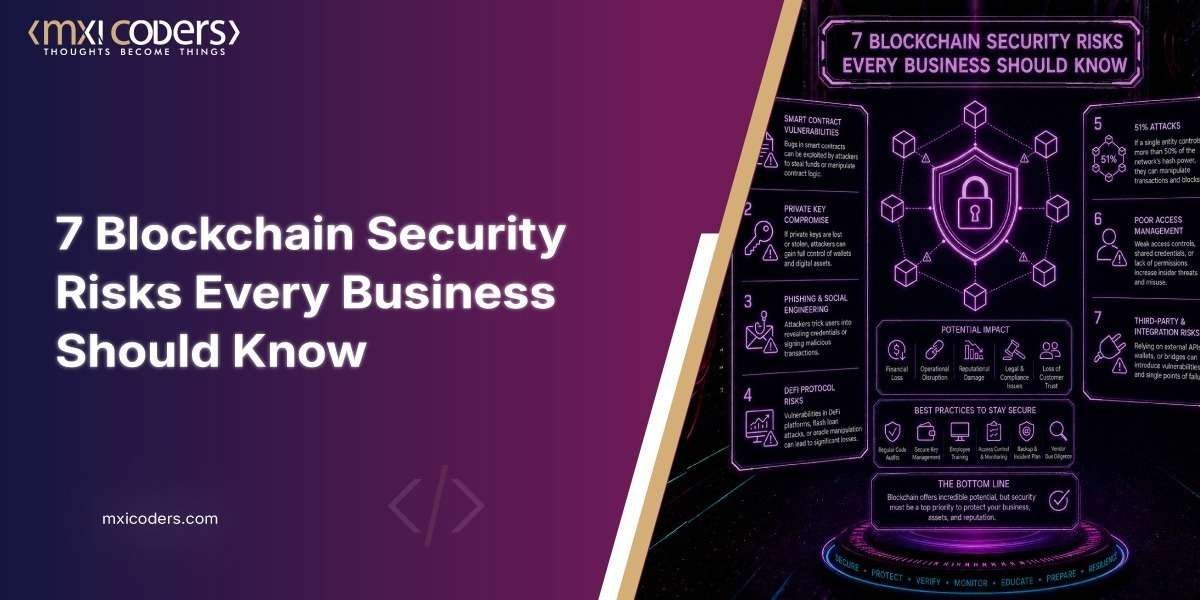
The implications of blockchain on business trust, ownership, transactions, and shared records have transformed the way businesses approach these concepts. The underlying ledger is supposed to be tamper-proof and tamper-proof. This makes changes in the ledger difficult to hide or make without being detected by blockchain’s cryptographic mechanisms and distributed validation. Smart contracts are code and code can have vulnerabilities. If there are any mistakes in the private key, it can enable an attacker to control assets. A manipulated oracle can provide false data to a “real” application. An insecure bridge could compromise security expectations on two networks that are otherwise secure.
While the integrity of recorded transactions may be safeguarded by the ledger, other applications, smart contracts, wallets, private keys, APIs, oracles, bridges, governance, etc. and the infrastructure of the ledger can still be vulnerable. The blockchain activities encompass not just ledger technology, but applications, services, protocols, security guarantees and cryptographic mechanisms, highlighting the need to take a holistic approach to blockchain security especially when building applications through custom enterprise blockchain development.
➤ What Makes Blockchain Security Different?
A traditional application security is concerned with preventing unauthorized access and manipulation of applications, databases, servers, identities and networks. But blockchain applications share a lot of security aspects with the rest, with an additional catch. They are distributed, cryptographically signed and executed automatically, which is hard to reverse. These distinctions also play out differently depending on the network layer involved. A Layer 1 blockchain like Ethereum or Bitcoin handles consensus and settlement directly, while aLayer 2 blockchain built on top of it introduces its own set of security assumptions around bridging, sequencing, and finality.
With a traditional database, the administrator can possibly fix a wrong record. In a blockchain, a mistaken transaction has already been mined and is part of the blockchain.
Blockchain Is Not Automatically Secure
Decentralization does not eliminate vulnerabilities. Distributed networks do help to eliminate a single point of control, but applications deployed on distributed networks can still be vulnerable due to compromised credentials, insecure integrations, flawed governance, or vulnerable code.
Immutability can make mistakes difficult to reverse. If a transaction is confirmed it can’t be undone as editing a traditional database record.
Public blockchains can expose transaction activity. A blockchain structure does not allow an easy extraction of the names of the people involved in the transactions directly from the addresses, but rather their transaction history is openly visible and reveals useful information both for analysts and attackers.
Smart contracts automatically execute logic. While one of the best aspects of blockchain, it is also a problem because if the code is vulnerable, it can take out the action even if the intervention of human beings has not been performed under the programmed conditions.
Private-key compromise can directly affect asset control. The keys in cryptography are essential to control ownership and transaction authentication in a blockchain. If an attacker gets the keys to an account or wallet they could be able to sign transactions on the account.
The end result is a security model that places the ledger as just one of the pieces that will require protection.
➥ Smart Contract Vulnerabilities
Smart contracts are programs that are deployed on the blockchain network, which automatically run a certain logic. They are able to automate payments, assets transfusions, loans, settlements, and other business processes, among others. But automation doesn’t make software safe.
The most frequent smart contract vulnerabilities are:
Access-control failures: Unauthorized users can be allowed to access administrative or privileged functions.
Business-logic errors: It may be technically correct but have an economically or operationally unintended outcome.
Reentrancy: If an external call is made to a vulnerable function before the function finishes calling the state update, then the attacker can re-enter the vulnerable function.
Unsafe external calls: Unchecked calls from external contracts or addresses can lead to non-deterministic or allow for exploit chains to be executed.
Sensitive contract logic can be exposed due to input-validation weaknesses of user, admin or cross-chain inputs.
Numerical mistakes: When the data is rounded, scaled and/or incorrect in its precision, there are opportunities for value extraction.
Integer overflow/underflow: Arithmetic operations that overflow or underflow can yield incorrect values, and violate critical contract assumptions.
Upgrade and Proxy vulnerabilities: Lack of upgrade and/or initialization controls might allow an attacker to replace or re-initialize essential contract logic.
The security of smart-contracts, therefore, should start prior to their deployment and not after an exploit has happened. A variety of techniques are involved: code review, threat modeling, testing, independent audits, controlled deployment and continuous monitoring. It’s worth noting that security and efficiency often go hand in hand and applying sound gas optimization techniques during development not only reduces transaction costs but also tends to simplify contract logic in ways that make vulnerabilities easier to spot during review.
➥ Private Key and Wallet Compromise
An attacker could get a private key that is legitimate on a blockchain network and use it to grant a malicious transaction to the network, causing it to operate exactly as designed. In such a case, it’s not always a problem with the consensus mechanism or ledger. It is at the safeguarding of the credential that the assets will be under control.
Private Keys can be compromised in many ways:
- Phishing
- Malware
- Credential theft
- Social engineering
- Insecure key storage
- Compromised employee devices
- Insider threats
- Fake wallet applications
Therefore, private-key management must be considered as a critical function in businesses where there are critical digital assets. Access needs to be controlled based on business need, sensitive keys should be well protected, and high value wallets should be controlled using appropriate methods, such as multisignature authorization as appropriate.
➥ Oracle Manipulation and Inaccurate External Data
A blockchain network can’t know all the things that occur outside the blockchain. Oracle is frequently used by smart contracts to provide data, like asset prices, exchange rates, interest rates, weather forecast, or other data that is not stored on-chain.
Consequences for the business could be:
- Incorrect asset valuation
- Manipulated lending positions
- Incorrect liquidations
- Mispriced transactions
- Direct financial losses
Therefore, if a business is using external blockchain data, then security shouldn’t be limited to the smart contract. Organizations should be aware of the source of the data, the validation procedures, the frequency of update and the mechanism for dealing with the lack of data or the occurrence of abnormal data.
➥ Blockchain Bridge and Cross-Chain Security Risks
The bridge technology on the blockchain can transfer assets, information or messages across different blockchain networks. A smart contract, validators, multisig, message-verification or other infrastructure can be used for a bridge. If any of these components is not working, it can impact data or assets that pass through it.
- Some common risks associated with bridges are:
- Compromised validator keys
- Incorrect message verification
- Smart-contract vulnerabilities
- Mint/burn logic errors
- Replay attacks
- Weak multisignature configuration
- Mistaking trust assumptions between chains.
The problem is how it is possible for two systems to become dependent upon each other for security. It’s possible for a business to be highly secure on one blockchain, but then be vulnerable with a weak cross-chain integration or bridge.
➥ Access Control and Governance Failures
The applications of the blockchain are often equipped with privileged functions that are capable of changing the configuration, upgrading contracts, stopping systems, managing assets, or modifying important parameters. Without such privileges protected correctly, hackers could avoid the need to penetrate the blockchain. They simply get admin control.
Some of the weaknesses of common governance are:
- Unauthorized admin access
- Weak multisignature configuration
- Exposed upgrade functions
- Incorrect role permissions
- Unprotected initialization
- Compromised governance keys
Access should be of least privilege. Processes need to be carefully managed in critical operations and sensitive administrative keys need to be well protected and upgrades need to undergo conscious governance processes, not just being controlled by one person.
➥ Phishing, Social Engineering, and Human Error
The attackers can pretend to be the executives, customer-support personnel, wallet services, recruiters, investment sites, or business partners. If the employee/user convinces him/herself or others that he/she can be trusted with the credentials and/or transaction, the attacker could use the legitimate entry for a malicious purpose.
Common threats include:
- Fake wallet websites
- Fake investment platforms
- Executive impersonation
- Fake job/posting campaigns or fake job or interview inquiries.
- Malicious transaction approvals
- Fake customer-support accounts
- Phishing emails
- Compromised employee accounts
The training of security should not be limited to just phishing awareness. Staff who deal with wallets, electronic possessions, smart contracts, or blockchain administration need an understanding of the signing of transactions, wallet addresses, requests for signatures, safeguarding of wallets, and impersonation strategies.
➥ Third-Party, API, and Infrastructure Security Risks
A blockchain application is likely not to be a standalone application. Typical modern blockchain systems rely on external services, cloud platforms, APIs, libraries and SDKs, wallets, custody services, oracles, bridges and front ends.
Potential scenarios include:
- Compromised dependency: Attacker is able to control the service that the application trusts.
- Malicious package: A software package which has been contaminated or intentionally malicious is introduced into the development environment.
- Manipulating the API: Intentional or intentional change of responses to the API leads to wrong decisions being made by the application.
- Compromising cloud accounts: An attack to infiltrate into cloud infrastructure that is used to host critical services.
- Redirecting from a valid application to an attacker-controlled destination: It is the DNS hijacking of a domain.
- Frontend compromise: Bad code is inserted in the user interface in which they interact with blockchain systems.
- Supply chain attack: When a trusted third party is the means by which malicious code or access gets into the organization.
This is why blockchain security doesn’t end at smart-contracts! Organizations need to keep track of critical dependencies, evaluate vendor security, monitor privileged software and infrastructure, manage software supply chain, and be aware of the potential impact of an external compromise on the operation of the blockchain. Working with an established smart contract development service can help here, since experienced teams typically bring standardized audit processes and dependency-monitoring practices into projects from day one rather than bolting them on later.
➤ Blockchain Security Checklist for Businesses
Any security program needs to be practical and consider blockchain risks into setups. When implementing or scaling a blockchain solution, companies need to ask themselves:
- Has the security of the blockchain been reviewed?
- Are there any smart contracts that have been audited by an independent company?
- Is the functionality of privileged functions properly secured?
- Is the privacy key kept secure?
- Do high value wallets come with multi-sig?
- Do oracle data sources get validated?
- Are there any dependencies with the bridge?
- Do third party dependencies have continuous monitoring?
- Do they have an incident response plan that has been documented?
- Is there on-going monitoring of blockchain transactions?
- Is there governance and/or timelocks in place for upgrades?
- Do staff know how to recognise phishing and social engineering attacks?
The checklist needs to be done more than just a pre-launch task. Blockchain applications change, dependencies change, smart contracts can be modified, the governance of the blockchain can change, and attackers are continuously developing new techniques. Security assessments should thus be carried on during the application’s lifecycle. Staying current with smart contract trends from account abstraction to evolving audit tooling is a itself part of keeping a security checklist relevant rather than letting it go stale.
➤ Conclusion
One is the security of the blockchain and the other is the security related with what interacts with the blockchain. Exploitable logic can be embedded in the smart contract. Private keys are susceptible to being compromised. Oracles can give you data that has been modified. The cross-chain vulnerabilities can be introduced by the bridges. Governance mechanisms have the potential to reveal privileged control. Staff could be tricked and third-party infrastructure can be an unanticipated path into a blockchain application.
Security must be built in, not added on, as part of the architecture of the application being developed as a custom enterprise blockchain development. It involves analyzing smart contracts’ logic, securing keys and key functions, verifying external data, evaluating third-party dependencies, and monitoring transactions, among other things, to ensure new attack surfaces are continually examined and preparation plans are in place for incidents. A security-first approach helps blockchain, a reliable and trusted infrastructure for businesses. Partnering with an experienced custom enterprise blockchain development company gives businesses access to this kind of security-first mindset from the outset, rather than treating it as an afterthought once a system is already in production.