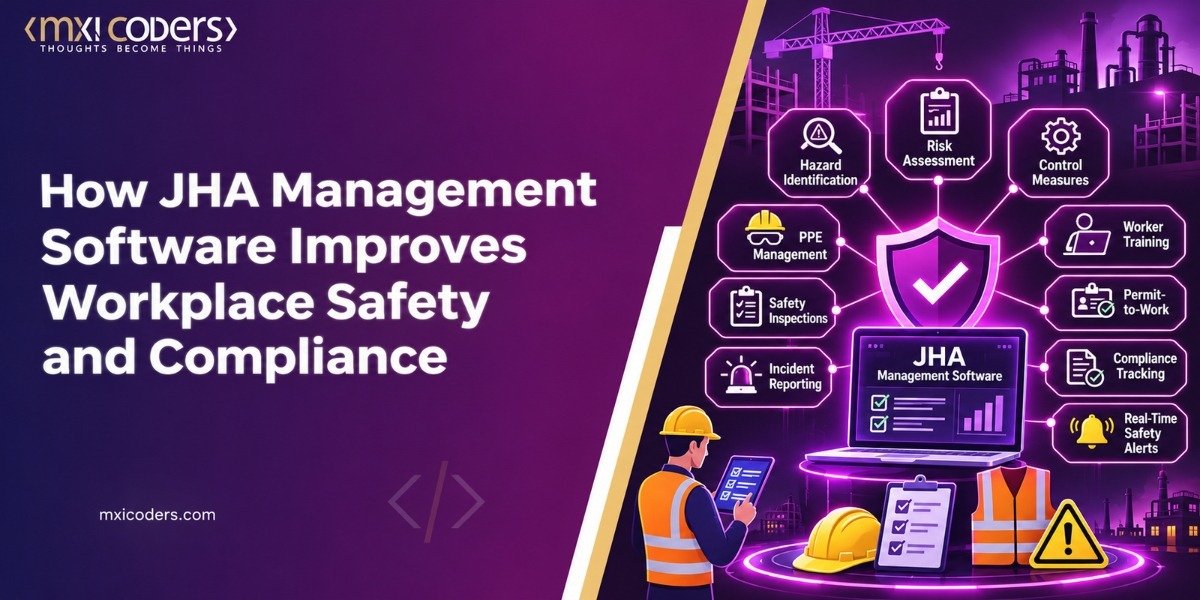
Ensuring workplace safety means identifying potential problems that could result in accidents. Companies are able to identify workplace hazards, perform job hazard analysis, establish safety procedures and ensure that all plans for remedial action are recorded in one centralized solution through the use of management software for JHAs.
One important aspect of managing workplace safety is Job Hazard Analysis (JHA). However, managing assessments via the use of spreadsheets, paper based forms and other documents means outdated information, missed risks and lack of proper implementation of remedial actions.
Luckily, through the use of digital tools, conducting risk assessments and organization of all safety related data and communications become much simpler.
➤ What Is JHA Management Software?
JHA Management software is an electronic tool that assists companies in managing the entire process of Job Hazard Analysis. It is an advanced method that has replaced the manual system with a structured system of identifying hazards, assessing risks, recording safety procedures and following up on the corrective measures.
JHA management software assists companies in the following tasks:
- Identifying workplace hazards.
- Assessing risk factors for certain job tasks.
- Recording safety procedures.
- Assigning corrective measures to employees.
- Monitoring safety procedure activities.
- Maintaining workplace safety records.
➤ What Is Job Hazard Analysis (JHA)?
Job Hazard Analysis is a step by step assessment of a particular task aimed at recognizing potential hazards and providing necessary safety precautions. The analysis includes segmentation of a task and evaluation of the connection between the workers, equipment, activities, and work environment.
For instance, during using industrial machines, a JHA will discover possible hazards such as moving parts of the machine, electrical risks, and misuse of the machinery. JHA is frequently confused with Job Safety Analysis (JSA). Both JHA and JSA include identification of hazards related to the job and safety precautions.
According to the OSHA, regular review of JHA is necessary. Such a review is required in case of significant changes in the workplace procedures, equipment, or processes.
➤ How Does JHA Management Software Improve Workplace Safety?
A digital approach makes hazard management more organized, consistent, and accessible. Here are five ways it improves workplace safety.
➥ Identifies Workplace Hazards Before Accidents Occur
However, where hazards are detected at their early stages, there is an opportunity for the company to correct the unsafe state before an accident happens. The online assessment process gives the opportunity for safety experts to detect various types of hazards such as physical, chemical, biological, and ergonomic hazards. Hazards can also be detected relating to machinery, equipment, and job operations. For example, a supervisor at a manufacturing company can detect the hazard related to a machine part and take the necessary precautions before an accident happens.
➥ Simplifies Job Hazard Identification and Risk Assessment
A complicated work is normally made up of several operations, all of which have some risk involved. With the help of job hazard analysis software, it will be possible for safety officers to evaluate the risks by examining the task and identifying the hazards.
➥ Improves Employee Safety Awareness
Safety at work is dependent on the participation of workers instead of relying solely on the decisions taken by the management. Online safety system provides guidelines and hazards report that could be accessed for certain jobs. Workers are able to report hazards, see safety measures and even discuss safety matters with their managers.
➥ Supports Faster Corrective Actions
Identification of the hazards is only the first step in the process. It would also need to have a method by which the measures required to address these hazards can be taken care of. The digital procedures help the safety officers assign the tasks and track the pending ones.
➥ Creates a Centralized Workplace Safety System
It becomes quite hard to manage safety records in instances where there are multiple departments and the data is scattered in various sheets and on pieces of paper. There is one central location that stores all JHA reports, inspection reports, risk assessments and corrective actions. It prevents duplication of documents and makes it easy to access information.
➤ How Does AI Job Hazard Analysis Improve Risk Identification?
The use of artificial intelligence technology has been bringing new abilities in handling workplace safety. The job hazard analysis process assisted with the help of AI can prove to be helpful for safety practitioners when it comes to reviewing information, identifying potential hazards, and organizing safety documentation.
➥ AI-Powered Hazard Identification
AI application will be used to analyze job, task, and incident descriptions to find potential risks. For analyzing construction tasks, where work is carried out at height, AI will determine fall risk and recommend evaluating fall protection methods.
➥ Automated Risk Assessment Recommendations
AI might first analyse the risk based on probability of risks and severity of risks. For the risk factors identified, AI could suggest preventive actions even with the order of their application. But such AI recommendations need to be verified by each expert in this safety domain in the real working environment..
➥ Predictive Workplace Safety Insights
Workplace accident and spill history can reveal some information about safety issues. AI would analyse the data, detect some patterns, and resolve activities that tend to trigger incidents. These insights would help in better planning and prevention.
➥ AI-Assisted Safety Documentation
AI would be able to facilitate the process of drafting JHA reports by organizing hazard descriptions, recommending preventive actions, and updating repetitive documents.
Significantly, AI produced evaluations need to be validated by humans. The suggestions made by AI are not evidence of regulatory compliance and can never take the place of physical inspection and safety assessment. The 2026 NIOSH guidance on AI further highlights the significance of controlling the risks posed by AI technology in workplaces.
➤ How JHA Management Software Helps Businesses Maintain Safety Compliance
Maintaining accurate safety documentation is important for organizations operating in regulated and high risk environments.
➥ Maintains Accurate Safety Documentation
Digital solutions will assist companies in organizing JHA reports, workplace inspection reports, corrective actions, and safety procedures. The updated report will facilitate access to the safety information.
➥ Supports OSHA Safety Requirements
The digital workflow for safety is one way for companies to keep track of the documentation related to hazard identification, risk assessment, workplace inspections, and prevention measures. It can also be used in the course of an incident investigation and corrective action tracking. Still, digitalization alone cannot ensure OSHA compliance. Relevant standards will vary by the industry, activities performed in the workplace, and applicable legislation.
➥ Simplifies Safety Audits and Inspections
In conducting the safety audit, employees have to look at the past assessments and check whether any corrective actions have been taken.
➥ Improves Accountability and Safety Monitoring
Assigning responsibilities and tracking deadlines helps businesses maintain accountability. Safety managers can monitor unresolved hazards, review completed actions, and maintain records of safety related activities across departments.
➤ Future of JHA Management: AI and Digital Workplace Safety
Data is increasingly becoming the basis for the management of workplace safety. There are opportunities for effective management of risks using AI, documentation and safety analytics in hazard identification. Together with the computerisation of safety management in companies, the fusion of technology, workforce involvement, and specialised guidance will remain important. Some of the areas to focus on will include AI to support better safety decisions.
➤ Conclusion
Ensuring workplace safety involves identifying hazards, assessing risks, taking action to prevent any safety issues and keeping records. This can be done easily using digital JHA solutions. These will ensure you have good records, risk assessments and increased accountability. Artificial intelligence can also be used to identify hazards and keep records.
If your business wants to improve their workplace safety programme they should look into implementing a digital JHA management solution.