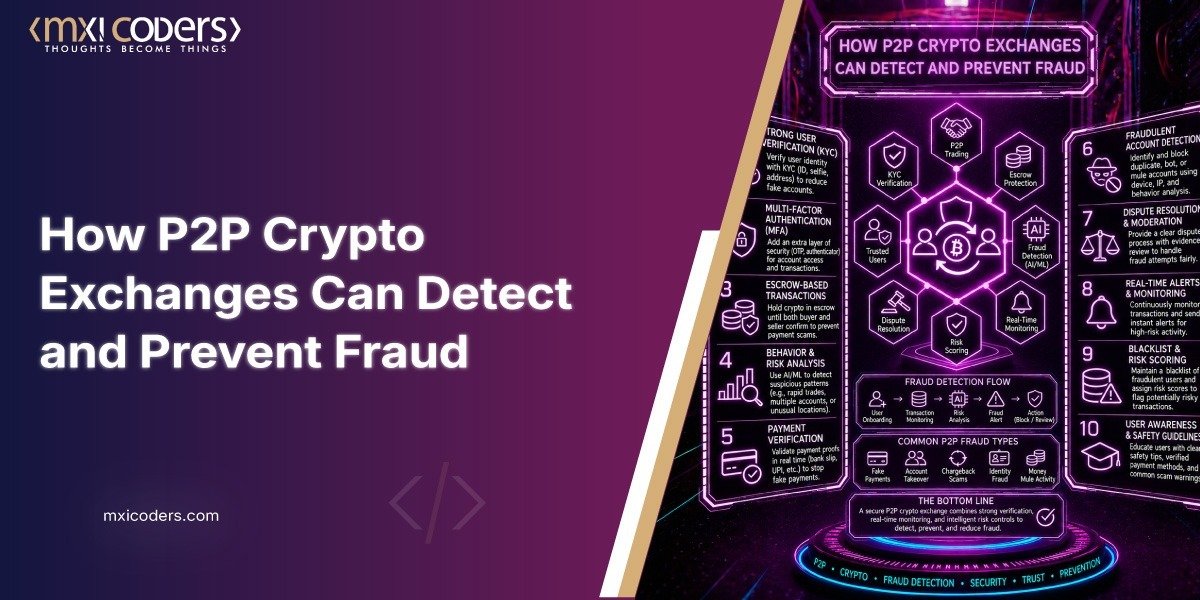
P2P crypto exchanges provide the ability to buy or sell cryptocurrency between parties directly. They determine their own rates and make a choice of payment methods, including bank wire transfer or mobile wallet, for example. This feature makes P2P exchanges attractive and gives a chance to scam someone. In case of fiat payment done off the platform, scammers find an opportunity to commit fraudulent activity.
Fraud prevention is necessary to protect both users and the platform itself. The most secure ones include KYC procedures, AML screening, escrow services, and fraud detection algorithms. In case it is implemented properly, the secure P2P crypto exchange software makes transactions safe on every step of the way.
➤ What Is Fraud in a P2P Crypto Exchange?
Fraud in p2p crypto exchanges refers to deception committed against either the trading partner or the platform to access crypto or money without completing a trade fairly. Payments in fiat currency are off chain, meaning that the exchange cannot confirm automatically whether the payment was made. The criminals use this loophole.
The main types of p2p exchange fraud include:
- Payment fraud: false or reversed payments
- Identity fraud: stolen or fake KYC documents
- Account takeovers: compromised user accounts
- Transaction manipulations: money laundering and third party payment tricks
That is why p2p exchange requires security measures that surpass wallet security alone.
➤ 7 Common Types of Fraud in P2P Crypto Exchanges
➥ Fake Payment Confirmation
A purchaser provides a modified screen shot or fake bill and asks the seller to hurry up with crypto. Sellers must make sure that funds have arrived in their bank account or payment system.
➥ Chargeback and Payment Reversal Fraud
The buyer uses a reversible payment method, gets the crypto, disputes the payment, and wins. Thus, a seller loses not only the money but the crypto.
➥ Identity Theft and Fake KYC Documents
Fraudsters try to provide stolen documents, tampered ID photos, or even fake synthetic identity, which is a mixture of real and fake information. Verification of documents along with liveness check prevents almost all such fraud cases.
➥ Account Takeover Attacks
Attackers get access to real user accounts via phishing, leaked passwords, hacked devices, and start withdrawing or making trades from there. Multi factor authentication and suspicious login activity monitoring are the primary measures to prevent these attacks.
➥ Man-in-the-Middle and Social Engineering Attacks
The scammers pretend to be a buyer, seller, or even customer support and try to shift the conversation out of the platform into an external messaging app, where no trace of the conversation is retained by the platform. Staying within the platform and sending notifications will minimize this risk.
➥ Money Laundering and Suspicious Transaction Activities
The criminals may employ the use of more than one account, fast back to back transactions, or sums that are slightly below the reporting threshold. The FATF and AUSTRAC red flags and indicators identify such patterns.
➥ Triangulation and Third-Party Payment Fraud
The fraudster places an order and gets an unsuspecting victim to send the payment, often by posing as a seller of goods the victim wants. The seller later faces a chargeback or a frozen bank account. Platforms should verify that the payer’s name matches the verified buyer.
➤ 8 Ways P2P Crypto Exchanges Can Detect and Prevent Fraud
➥ Implement Strong KYC and Identity Verification
Perform identity verification for high risk trading through the use of document checks and biometric liveness detection tests. Duplicate accounts should be identified, stricter identity verifications performed for greater amounts and actions, and accounts checked periodically.
➥ Use AI-Powered Fraud Detection and Transaction Monitoring
Machine learning based monitoring tools check the trades and raise the alarm in case of unusual frequency, amounts, logins location, IP addresses or devices. Automated alarms have to be reviewed by humans who make the final decision.
➥ Integrate Secure Escrow Mechanisms
Escrow keeps the cryptocurrency owned by the seller before payment is confirmed. In many cases, smart contracts may be used to automate this process. It will provide the company with clear rules for disputing and documented transaction records for investigating any potential issues.
➥ Strengthen Account Security With Multi-Factor Authentication
Force 2FA, withdrawal confirmation, and address whitelisting. Set up automatic login alerts, identify unknown devices, set limits on withdrawals from new accounts.
➥ Apply Blockchain Analytics and Wallet Risk Screening
Check wallet addresses for any links to sanctioned entities, scams, or illegal businesses. Monitor for any abnormal movement of funds and risk assessment of wallets before approving high risk trades.
➥ Verify Payments Before Releasing Cryptocurrency
Approve transactions via official integrations and verified user account information, and not just via screenshots. Verify that the name of the payer corresponds to the buyer and check for duplicate payment references.
➥ Build an Effective Dispute Resolution and Reporting System
Implement an in platform dispute resolution system where the users can submit the evidence. Collect chat logs, payment logs, initiate a fraud investigation procedure, and freeze the accounts in case of necessary.
➥ Conduct Regular Security Audits and Smart Contract Testing
Conduct penetration testing and smart contract auditing on a regular basis. Audit the wallet structure and access rights and perform API tests for any vulnerabilities and apply security patches.
➥ How to Choose a Secure P2P Exchange Development Company
Choose someone who has worked with crypto exchange development before, particularly in the construction of wallets and escrows. Find out what kinds of KYC, AML, and transaction tracking systems they have integrated. Find out if they also work on smart contract development and audit processes internally or not. See how they deal with scalability, API protection, and post launch support. If you need fast delivery, then maybe you should choose a prebuilt solution.
➤ Conclusion
Since P2P trade fraud is always evolving, prevention must be a proactive process. The most effective ways of preventing fraud in P2P trade include KYC, escrow, AI tracking, and blockchain analysis. These measures must be implemented in layers that complement each other. Security measures must be incorporated into the initial stages of P2P crypto exchange development since implementing them later becomes costly.
Looking to develop a fraud proof, scalable P2P platform? Contact MXICoders!