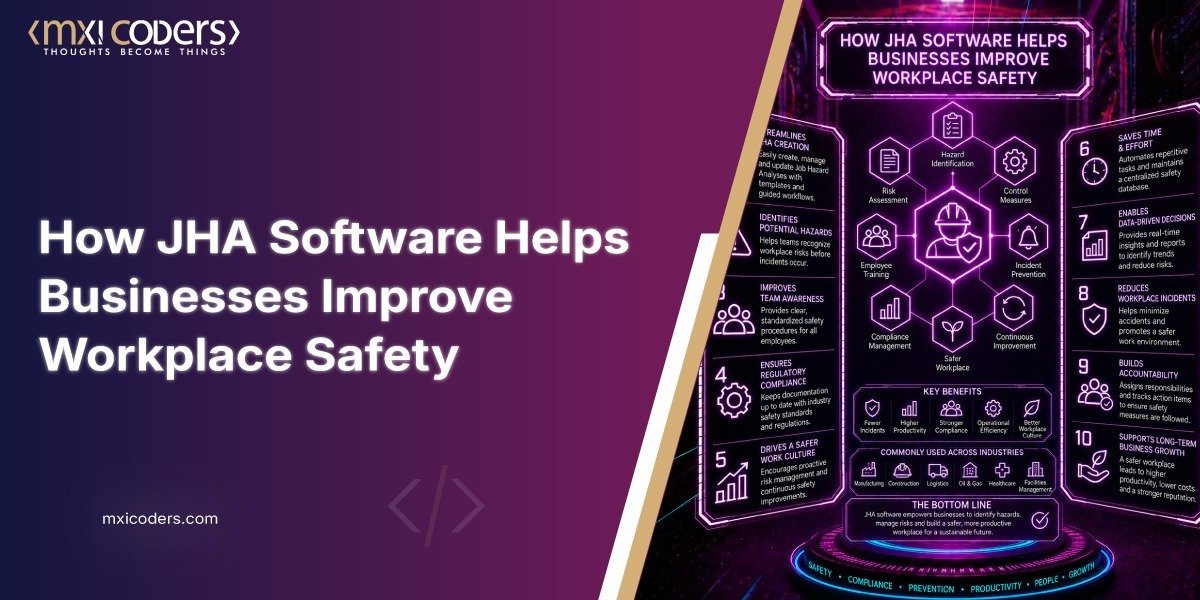
There are always risks in any workplace. A slippery floor in the warehouse, an unprotected machine in a production plant or an improperly utilized ladder in the construction industry can change a usual workday into a harmful experience. An accident at the workplace is always caused by either not identifying a potential hazard or not registering it and communicating it.
This is the reason why workplace safety is so essential. An excellent safety culture eliminates the risks, avoids any injuries, retains productivity and keeps the company on par with health and safety regulations.
Job Hazard Analysis Software is one of the best ways to develop a safety culture. It is a way of evaluating a particular activity and answering a series of questions such as “What can go wrong and how can I prevent it from happening?” Digital JHA tools do that job without paperwork and collaboratively. Thus, the result is efficient risk assessment and increased awareness for each employee in the workplace.
➤ What Is JHA Software?
JHA software is an online solution for identifying, recording, and managing the hazards associated with certain types of work. According to OSHA, a Job Hazard Analysis is an approach where the connection between the employee, the job, the tools used, and the surroundings is analyzed.
The majority of JHA solutions use the following three step approach to analyzing the hazard:
- Break down the job into tasks. “Replace a conveyor belt” becomes a set of clearly defined consecutive steps.
- Identify potential hazards. Each step becomes a source of some kind of risk: pinching, electricity shock, falling, etc.
- Define controls for each identified hazard. The example controls may include lock out/tag out, personal protective equipment, alternative method of execution.
All of the information is stored in one place – instead of multiple binders, spreadsheets, and documents located in different places. Supervisors can edit procedures in one place, and employees can access the latest version of it anywhere on their mobile devices.
➤ How JHA Software Improves Workplace Safety
➥ Identifies Workplace Hazards Earlier
It will always be better to identify the hazards before working on the project. The use of digital JHAs ensures that teams identify the risks before planning the project, and not because something will happen. With hazard checklists and risk ratings (likelihood x severity) being built into it, teams have to know which controls to implement before anything else.
➥ Standardizes Safety Procedures
Each time supervisors develop JHAs in their own way, certain elements are inevitably overlooked. Computerized templates make sure that everything stays consistent across shifts, teams, and sites. Employees get instant access to instructions for the particular task, which means that everything is done the same way every time.
➥ Improves Employee Training and Awareness
For any process, the risks, safety measures, and right procedure can be read by the employees prior to commencing the process. This information will be used by the supervisors to conduct tool box talk and pre-job briefing. The electronic signature is a good means of recording the people who have seen the procedure at a particular point in time.
➥ Simplifies Safety Inspections and Reporting
Incidents, near-misses, corrective actions, and hazards can be reported from the field, which can even include images. The recording of everything takes place in a single system, so that the safety manager gets the visibility immediately without having to wait for the forms to reach his office. All open actions are logged and completed.
➥ Supports Compliance and Documentation
The audit team expects to have proof that the risk assessment took place, controls were put into effect, and employees were made aware. Having structured records with timestamps allows finding that information quite easily. Yet, one more thing needs to be noted: software tools can assist with compliance management, yet do not ensure compliance with the regulations.
➥ Enables Data-Driven Safety Decisions
Eventually, safety data becomes a useful database. The reports can show that some dangers recur, that some jobs are risky, or that there are more close calls at one location compared to another. Management can use this information to take appropriate actions.
➤ How AI Can Enhance Workplace Safety Management
AI is streamlining the process of working with safety data. Similarly to how AI recruitment algorithms analyze large bodies of text and recognize patterns in them, the same technology can be used with incident reports and hazard logs.
The potential uses of AI in the field of safety include:
- Automatic classification and tagging of hundreds of free text reports
- Recognition of patterns of hazards within and between different sites or shifts
- Suggestion of potential controls when creating a new JHA
These suggestions must always be considered a starting point, never an end product. All risk assessments based on AI need to be reviewed by a qualified person since those who carry out the work know the site conditions that no algorithm knows about.
However, proper use of AI depends on proper data. If the reports are incomplete or inconsistent, the analysis will suffer as well. Companies need to respect employees’ privacy, be transparent about how data is used and involve them in reviewing results. The NIST AI Risk Management Framework provides useful guidelines in this area.
➤ Conclusion
With digital JHA, you will be able to detect the risks early, apply preventive measures effectively, and ensure that your safety records are well-organized. Digital JHA ensures that the task of safety becomes a living thing for all workers.
Of course, technology alone does not guarantee success. It should be accompanied by employee training, managerial engagement, and periodic site inspections. The combination of people and technology makes safety an integral part of work. All companies have unique workflows, so pre made solutions may not be enough for your business. MXIcoders develop custom software tailored to your needs, including safety and compliance platforms, job board software development, and AI resume screening software.