[ Your Headline ] [ Highlight Word ]

[ One or two lines describing the offer — e.g. "Experience our services with a FREE 30-minute consultation." ]

[ Optional second line, e.g. "Have a concept in mind? Let's brainstorm together!" ]

Google ★★★★★ 4.8
GoodFirms ★★★★★ 4.7
Clutch ★★★★★ 5.0
Blockchain

How Blockchain Ticketing Platforms Work

Ashok Rathod

Tech Consultant

Posted on
29th Sep 2026
6 min
Read
Share

Table of Contents

  • Quick Tips
  • Familiarize yourself with Cash App
  • Enable two-factor authentication
  • Utilize the optional Cash App
  • Conclusion

Blockchain-based ticketing uses a distributed ledger to create, record, transfer, and verify digital event tickets. Each ticket can be represented as a unique digital token, while smart contracts can control ownership, resale, refunds, and entry rules.

For organizers, this can improve traceability and resale control; for attendees, it can provide clearer proof of ownership. Blockchain still requires secure wallets, identity checks, and reliable venue verification.

➤ What Is a Blockchain Ticketing Platform?

A blockchain ticketing platform is a system that issues and manages event tickets using blockchain records and programmable smart contracts. Tickets may be represented as NFTs or other unique digital assets linked to an event, seat, ticket class, and owner. Traditional ticketing usually stores ownership in one provider’s database. A blockchain model can create a verifiable record of creation and transfers, making ownership easier to audit.

Ethereum’s ERC-721 standard supports unique digital assets with distinct identifiers and transfer functions; its documentation lists access keys and numbered tickets among possible NFT uses.

➤ How Does Blockchain Ticketing Work?

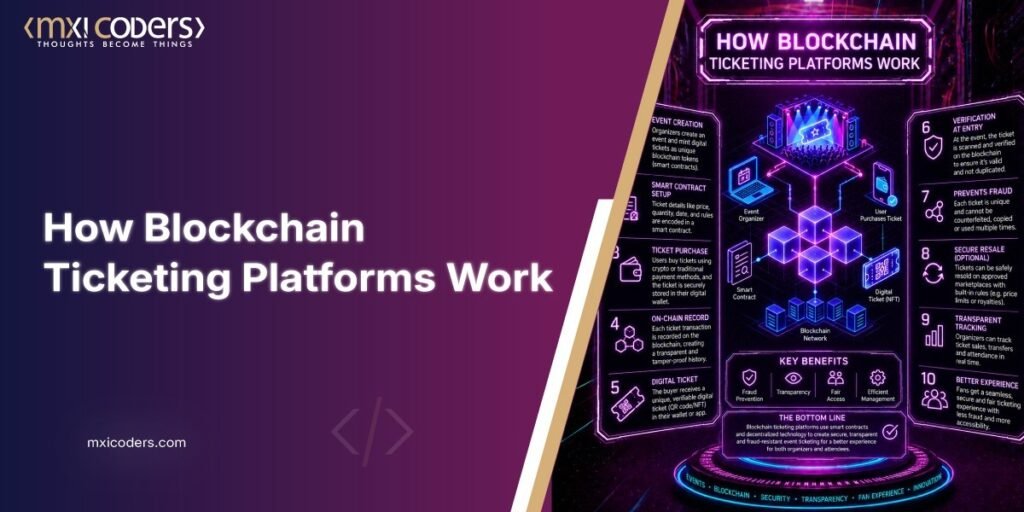
Blockchain ticketing typically follows four stages: ticket creation, blockchain recording, purchase or transfer, and entry verification.

➥ How Are Tickets Created and Tokenized?

The organizer defines event details such as date, venue, seat, category, price, and transfer rules. The platform then mints or registers each ticket as a unique token.

Ticket metadata may be stored on-chain or linked to off-chain storage, while sensitive personal information should generally remain off-chain.

➥ How Are Tickets Stored on the Blockchain?

The blockchain can store the ticket identifier, contract address, ownership status, and transaction history. Larger files and attendee details may remain off-chain.

➥ How Does Ticket Purchase and Ownership Transfer Work?

When a customer buys a ticket, the platform assigns the token to a wallet or managed account. Payment can use fiat, crypto, or both. If transfers are permitted, smart contracts can define transfer deadlines, approved resale channels, price limits, or organizer fees.

➥ How Is a Ticket Verified at Event Entry?

At entry, the attendee presents a QR code, mobile ticket, or wallet credential. The system checks validity, ownership, and whether the ticket has already been redeemed. UEFA said that 100% of tickets sold to the general public for the 2018 UEFA Super Cup were distributed through its blockchain-based mobile ticketing system.

➤ What Are the Key Features of a Blockchain Ticketing Platform?

The main features combine unique digital ownership with automated ticket-management rules.

➥ What Are NFT-Based Digital Tickets?

NFT-based tickets represent individual admissions or seats as unique tokens. Standards such as ERC-721 provide functions for identifying owners and transferring tokens.

➥ How Is Ticket Ownership Secured?

Ownership is linked to a blockchain address or managed wallet, while transaction records identify the latest valid holder.

➥ What Can Smart Contracts Automate?

Smart contracts can automate ticket issuance, transfers, resale restrictions, fees, royalties, and refund conditions according to predefined rules.

➥ How Can Resale and Transfers Be Controlled?

Organizers can define approved resale channels, maximum resale prices, transfer deadlines, or resale fees. This can make secondary-market activity easier to manage.

➥ How Does QR Code or Wallet Verification Work?

A ticket record is connected to a scannable credential. Rotating QR codes, device binding, or one-time redemption can make screenshot reuse harder.

➤ What Is the Role of Smart Contracts in Blockchain Ticketing?

Smart contracts are the programmable rules layer. They can issue tickets, validate transfers, calculate resale fees, and support refund logic.

For example, a contract could allow resale only through an approved channel. Smart contracts should be tested and audited because deployed errors can be difficult to correct. Blockchain state changes, such as token transfers or NFT minting, generally require signed transactions to update the network.

➤ What Are the Benefits of Blockchain Ticketing?

The main benefits are traceable ownership, programmable transfer rules, and more transparent ticket histories.

  • Reduced counterfeiting risk: Unique token identifiers can make duplicated tickets easier to detect.
  • Transparent ownership: The system can verify the current holder and authorized transfer history.
  • Controlled resale: Smart contracts can restrict transfers or keep resale within approved channels.
  • Better revenue options: Organizers can configure resale fees, collectibles, memberships, or loyalty benefits.
  • Improved customer experience: Embedded or managed wallets can make transfers easier for non-technical users.

These benefits depend on implementation quality and do not prevent phishing or stolen credentials.

➤ How Do You Build a Blockchain Ticketing Platform?

A reliable platform requires product planning, blockchain engineering, security, payments, and entry testing.

  1. Define the ticketing model, including seat allocation, pricing, refunds, resale, transfers, and identity requirements.
  2. Choose a blockchain based on transaction cost, speed, scalability, security, and ecosystem support.
  3. Develop and audit smart contracts for minting, ownership, transfer, resale, and refunds.
  4. Build customer apps, organizer dashboards, event-management tools, and entry-verification systems.
  5. Integrate wallets and payment methods. Embedded or custodial wallets can reduce Web3 complexity.
  6. Test and deploy using smart-contract tests, load testing, security reviews, and venue simulations.

Projects that need secondary trading may also evaluate NFT marketplace services for listing, transfer, royalty, and compliance workflows instead of building every marketplace component from scratch.

➤ What Are the Main Challenges of Blockchain Ticketing?

The main challenges are scalability, transaction costs, user adoption, regulation, and privacy. Network congestion can increase fees, while wallet setup and key management can confuse users. Compliance may also involve payments, consumer protection, identity checks, taxation, and resale rules.

Public blockchains are transparent, so platforms should minimize exposure of personal data and carefully decide what belongs on-chain versus off-chain.

➤ What Is the Future of Blockchain-Based Ticketing?

The future is likely to focus on programmable digital ownership. Tickets could also support loyalty benefits, collectibles, memberships, digital identity, or post-event access. Large-scale deployments have already demonstrated the concept. UEFA announced that more than one million EURO 2020 tickets would be distributed to mobile phones through its blockchain-based ticketing system. It also reported that more than 110,000 tickets had previously been delivered to mobile phones for the 2019 UEFA Nations League Finals.

➤ Conclusion

Blockchain ticketing can improve creation, ownership, transfer, resale, and verification through unique digital assets and programmable rules. Its effectiveness still depends on secure wallets, privacy, and reliable entry systems.

Businesses exploring a custom solution can review MXICoders for requirements such as smart contracts, wallet integration, resale workflows, and ticket verification. The technology should be chosen based on the event model and user needs.

➤ Sources Used

how blockchain ticketing platforms work (blog image)

Blockchain-based ticketing uses a distributed ledger to create, record, transfer, and verify digital event tickets. Each ticket can be represented as a unique digital token, while smart contracts can control ownership, resale, refunds, and entry rules.

For organizers, this can improve traceability and resale control; for attendees, it can provide clearer proof of ownership. Blockchain still requires secure wallets, identity checks, and reliable venue verification.

➤ What Is a Blockchain Ticketing Platform?

A blockchain ticketing platform is a system that issues and manages event tickets using blockchain records and programmable smart contracts. Tickets may be represented as NFTs or other unique digital assets linked to an event, seat, ticket class, and owner. Traditional ticketing usually stores ownership in one provider’s database. A blockchain model can create a verifiable record of creation and transfers, making ownership easier to audit.

Ethereum’s ERC-721 standard supports unique digital assets with distinct identifiers and transfer functions; its documentation lists access keys and numbered tickets among possible NFT uses.

➤ How Does Blockchain Ticketing Work?

Blockchain ticketing typically follows four stages: ticket creation, blockchain recording, purchase or transfer, and entry verification.

➥ How Are Tickets Created and Tokenized?

The organizer defines event details such as date, venue, seat, category, price, and transfer rules. The platform then mints or registers each ticket as a unique token.

Ticket metadata may be stored on-chain or linked to off-chain storage, while sensitive personal information should generally remain off-chain.

➥ How Are Tickets Stored on the Blockchain?

The blockchain can store the ticket identifier, contract address, ownership status, and transaction history. Larger files and attendee details may remain off-chain.

➥ How Does Ticket Purchase and Ownership Transfer Work?

When a customer buys a ticket, the platform assigns the token to a wallet or managed account. Payment can use fiat, crypto, or both. If transfers are permitted, smart contracts can define transfer deadlines, approved resale channels, price limits, or organizer fees.

➥ How Is a Ticket Verified at Event Entry?

At entry, the attendee presents a QR code, mobile ticket, or wallet credential. The system checks validity, ownership, and whether the ticket has already been redeemed. UEFA said that 100% of tickets sold to the general public for the 2018 UEFA Super Cup were distributed through its blockchain-based mobile ticketing system.

➤ What Are the Key Features of a Blockchain Ticketing Platform?

The main features combine unique digital ownership with automated ticket-management rules.

➥ What Are NFT-Based Digital Tickets?

NFT-based tickets represent individual admissions or seats as unique tokens. Standards such as ERC-721 provide functions for identifying owners and transferring tokens.

➥ How Is Ticket Ownership Secured?

Ownership is linked to a blockchain address or managed wallet, while transaction records identify the latest valid holder.

➥ What Can Smart Contracts Automate?

Smart contracts can automate ticket issuance, transfers, resale restrictions, fees, royalties, and refund conditions according to predefined rules.

➥ How Can Resale and Transfers Be Controlled?

Organizers can define approved resale channels, maximum resale prices, transfer deadlines, or resale fees. This can make secondary-market activity easier to manage.

➥ How Does QR Code or Wallet Verification Work?

A ticket record is connected to a scannable credential. Rotating QR codes, device binding, or one-time redemption can make screenshot reuse harder.

➤ What Is the Role of Smart Contracts in Blockchain Ticketing?

Smart contracts are the programmable rules layer. They can issue tickets, validate transfers, calculate resale fees, and support refund logic.

For example, a contract could allow resale only through an approved channel. Smart contracts should be tested and audited because deployed errors can be difficult to correct. Blockchain state changes, such as token transfers or NFT minting, generally require signed transactions to update the network.

➤ What Are the Benefits of Blockchain Ticketing?

The main benefits are traceable ownership, programmable transfer rules, and more transparent ticket histories.

  • Reduced counterfeiting risk: Unique token identifiers can make duplicated tickets easier to detect.
  • Transparent ownership: The system can verify the current holder and authorized transfer history.
  • Controlled resale: Smart contracts can restrict transfers or keep resale within approved channels.
  • Better revenue options: Organizers can configure resale fees, collectibles, memberships, or loyalty benefits.
  • Improved customer experience: Embedded or managed wallets can make transfers easier for non-technical users.

These benefits depend on implementation quality and do not prevent phishing or stolen credentials.

➤ How Do You Build a Blockchain Ticketing Platform?

A reliable platform requires product planning, blockchain engineering, security, payments, and entry testing.

  1. Define the ticketing model, including seat allocation, pricing, refunds, resale, transfers, and identity requirements.
  2. Choose a blockchain based on transaction cost, speed, scalability, security, and ecosystem support.
  3. Develop and audit smart contracts for minting, ownership, transfer, resale, and refunds.
  4. Build customer apps, organizer dashboards, event-management tools, and entry-verification systems.
  5. Integrate wallets and payment methods. Embedded or custodial wallets can reduce Web3 complexity.
  6. Test and deploy using smart-contract tests, load testing, security reviews, and venue simulations.

Projects that need secondary trading may also evaluate NFT marketplace services for listing, transfer, royalty, and compliance workflows instead of building every marketplace component from scratch.

➤ What Are the Main Challenges of Blockchain Ticketing?

The main challenges are scalability, transaction costs, user adoption, regulation, and privacy. Network congestion can increase fees, while wallet setup and key management can confuse users. Compliance may also involve payments, consumer protection, identity checks, taxation, and resale rules.

Public blockchains are transparent, so platforms should minimize exposure of personal data and carefully decide what belongs on-chain versus off-chain.

➤ What Is the Future of Blockchain-Based Ticketing?

The future is likely to focus on programmable digital ownership. Tickets could also support loyalty benefits, collectibles, memberships, digital identity, or post-event access. Large-scale deployments have already demonstrated the concept. UEFA announced that more than one million EURO 2020 tickets would be distributed to mobile phones through its blockchain-based ticketing system. It also reported that more than 110,000 tickets had previously been delivered to mobile phones for the 2019 UEFA Nations League Finals.

➤ Conclusion

Blockchain ticketing can improve creation, ownership, transfer, resale, and verification through unique digital assets and programmable rules. Its effectiveness still depends on secure wallets, privacy, and reliable entry systems.

Businesses exploring a custom solution can review MXICoders for requirements such as smart contracts, wallet integration, resale workflows, and ticket verification. The technology should be chosen based on the event model and user needs.

➤ Sources Used

➤ Frequently Asked Questions

Are blockchain tickets the same as NFTs?
Not always. A blockchain ticket can be implemented as an NFT, but other ledger or token models are possible. NFTs are useful when each ticket needs a unique identity and ownership record.
Can blockchain completely prevent ticket fraud?
No. It can improve ownership verification and transfer traceability, but it cannot eliminate phishing, account theft, fake websites, or stolen credentials.
Do users need cryptocurrency to buy blockchain tickets?
Not necessarily. A platform can accept cards, bank payments, or other fiat methods while handling blockchain transactions in the background.
Can blockchain tickets be resold?
Yes, if the ticket rules allow it. Smart contracts can define approved channels, resale conditions, transfer limits, and organizer fees.
Which blockchain is best for ticketing?
There is no single best network. The choice depends on cost, throughput, security, developer support, wallet compatibility, and the required level of decentralization.

Get In Touch

Get thoughtful updates on what’s new in technology and innovation

Feel free to Connect us on

Ready to transform your business with smart software solutions?

Harness the power of custom software development to streamline operations, reduce costs, and boost efficiency. Start by exploring cutting-edge approaches like cloud-native platforms, API-first architecture, and AI-driven automation to future-proof your systems and stay ahead of the competition.

Book free consultation

Let’s build your idea together and serve society.

Author

Ashok Rathod

Tech Consultant

Experience
25 Years
Growth Architect for Startups & SMEs | Blockchain, AI , MVP Development, & Data-Driven Marketing Expert.

Transform the Carbon Credit Industry

Build a Transparent, Scalable Carbon Credit Marketplace with Blockchain.

Let's build something real!

Share your ideas with us and we’ll turn them into powerful digital solutions.

500+

Projects

20+

Experience

255+

Clients

Tell us about your project

Our team will get back to you within 24 hours