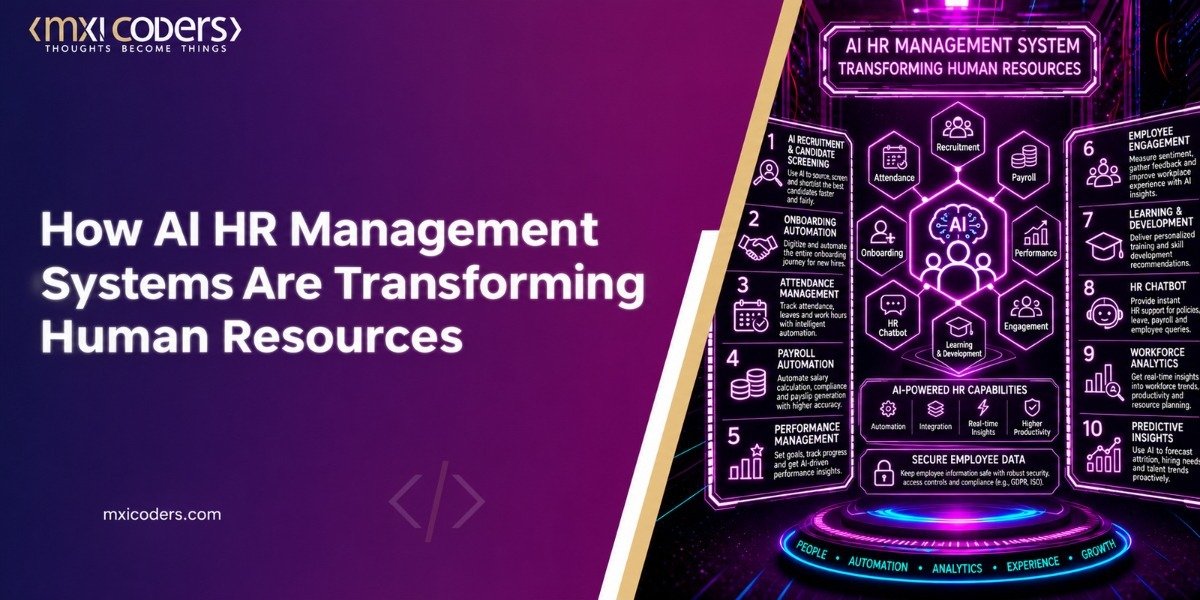
The evolution of human resource management has undergone many changes due to the growth of businesses and changes in workplace expectations. Recruitment, record keeping, payroll processing, attendance monitoring and answering employees’ questions require a lot of time from an HR department. Manual handling of all these processes increases the risk of errors and delays.
In this regard, artificial intelligence comes into play. Modern HR tools make use of automation, analytics and assistance to facilitate routine tasks. AI HR management software enables companies to optimize their recruitment process, employee information, performance and workforce planning. HR managers can save their time and efforts on routine activities and concentrate on people, employee development and strategic objectives of a company.
➤ What Is an AI HR Management System?
The AI HR Management System is computer software that uses artificial intelligence in order to automate HR functions. This system combines conventional HR functions such as managing the employees’ database, payroll, and attendance systems with the technologies capable of analyzing data, recognizing patterns, and making decisions.
There are three types of technology that can be used for this purpose:
- Machine Learning: Examines past data in order to detect patterns and predict information related to recruitment, performance and workforce needs.
- Natural Language Processing (NLP): Assists software in understanding queries made by employees, screening resumes and providing help through conversation.
- Predictive Analytics: Uses workforce data to detect trends and forecast future needs as well as issues related to retention of employees.
Traditional HRMS platforms primarily store employee information and manage predefined workflows. AI enabled platforms go further by analyzing information and recommending possible actions. However, human supervision remains important, particularly when decisions affect employees.
➤ 7 Ways AI HR Management Systems Are Transforming Human Resources
➥ Automating Recruitment and Talent Acquisition
The process of recruiting requires engaging in many different time-consuming processes like screening resumes to interviewing candidates. An AI system will be able to assist the recruitment team to screen resumes based on the job descriptions. An AI-based HR system will be able to handle processes such as scheduling interviews and answering basic candidate queries. The process will ensure that the recruiter has ample time to evaluate and conduct interviews.
➥ Improving Employee Onboarding
Onboarding provides assistance to employees to adapt to the jobs effectively without facing any confusion. Nevertheless, the activities such as document collection, policy provision, and joining formalities will place extra burden on HR personnel.
AI automation eases the processes by documenting and monitoring the process of onboarding and providing reminders. The new hires will benefit from virtual assistance when looking for answers regarding various policies and other aspects related to their organization.Consequently, employees will receive relevant information on time, and HR staff will monitor the process of onboarding.
➥ Enhancing Employee Performance Management
Conventional performance appraisals are generally based on periodic feedback and documentation. With the help of AI, one can get a more comprehensive perspective through the analysis of performance data, accomplishments achieved, status of projects, and other related data.
This helps in finding out skill gaps and opportunities for improvement and designing activities for developing employees. The human resource department can also utilize performance trends for better review meetings. The key thing is that AI should only support performance appraisals and not make judgments about employee’s abilities and prospects.
➥ Streamlining Payroll and Attendance Management
Errors related to the payrolls and the attendance can influence the satisfaction levels of the employees and generate additional administrative work. In such cases, automated solutions that use AI can be utilized for tracking the attendance, detecting anomalies, managing the working hour records and calculating the payroll.
As an example, an abnormal situation will emerge when the attendance of the employee differs from the approved data regarding leave requests. Attendance, leave management and payroll integration will decrease the need for keeping the data in several places simultaneously.
➥ Improving Employee Engagement and Retention
Employee motivation continues to be a major issue for companies to address. AI technology can help HR departments analyze employee opinions, surveys and engagement trends.
As a result of this analysis, companies can detect any repetitive issues connected to workload, job satisfaction or management. Predictive algorithms can also point out trends associated with employee churn. This gives HR departments a chance to look into these issues and implement necessary engagement programs before the situation becomes worse. Nevertheless, employee monitoring should be done in accordance with certain privacy principles.
➥ Enabling Data-Driven HR Decisions
Making the decisions in the HR department becomes easier when the decisions are guided by valid information. AI HR solutions provide report generation in areas like recruitment, employees turnover rates, attendance statistics, as well as demographics of the workforce.
In the case where there are plans for growth, the existing workforce can be analyzed in order to determine hiring needs in the future. Recruitment reports are equally useful when deciding whether the available sources for recruiting are providing suitable candidates. This eliminates the need for guesswork and assumptions based on spreadsheet work.
➥ Providing AI-Powered Employee Self-Service
It is common for employees to call up the HR department of their organization regarding leave balances, pay slips, organizational policy and other such matters. Answering all these queries individually may hamper HR work.
With the help of AI chatbots and an employee self-service portal, information can be easily gained by employees. They can put forward their queries in natural language and get guidance from HR procedures. It will lessen unnecessary communications and enable the HR to concentrate on other issues of the employees.
➤ How to Choose the Right AI HR Management Software
Selection of an appropriate HR platform goes beyond comparing features. It is important to look at how well the software integrates with your processes and future needs.
The following are six things that you can consider:
- Determine HR Needs: Determine what areas require improvement; it could be recruiting, payroll, attendance or employee management.
- Consider Necessary Features: Pick a platform that addresses your needs currently without being too complex.
- Integration Capabilities: Make sure that it integrates well with existing accounting, payroll, communication and business software.
- Data Security: Consider access controls, data security measures and compliance with any regulations.
- Customization and Scalability: The platform should accommodate changes in workflow and increased number of employees.
- Reporting Capabilities: See whether it provides useful analytics that can help HR managers know the performance of their workforce.
In addition, see how it integrates with AI-generated recommendations. Recruitment and performance-related recommendations should be transparent and reviewed on a regular basis.
➤ The Future of AI in Human Resource Management
The future for AI in human resource management will have more intelligent automation and personalized experiences for employees. Using generative AI, it will become easier for HR personnel to create job descriptions and synthesize employee feedback and organizational information. In addition, predictive workforce analytics will assist organizations in anticipating their need for hiring and finding out about skills deficiencies within their organization to develop their employees.
Intelligent HR automation will be another key trend related to HR applications that will perform several administrative tasks automatically without human involvement. Organizations should also ensure no algorithmic bias, privacy concerns, and inaccuracies occur. In this regard, one should point to the 2025 International Labour Organization working paper that outlines how algorithmic bias, unclear objectives, and AI itself can influence the decision-making of HR. The most successful organizations will be those that combine the power of technology and human decision-making.
➤ Conclusion
The advent of artificial intelligence in business processes is transforming how companies hire, manage, and develop their employees. From automation in recruiting and onboarding of new hires, through payroll, performance tracking, and workforce planning, HR software is enabling businesses to streamline some of their operations. But it must be understood that technology cannot create the right workplace environment. Employees’ relations, resolving conflicts, leadership, and career development all rely on human judgment.
It is important for businesses to use intelligent HR software as a facilitator in managing their HR processes, and not as a replacement for HR professionals. The right balance of automation, reliable information, and human judgment can foster productivity and a more focused workforce.
Want to get an intelligent HR management system for your company? MXIcoders can assist you in exploring custom software development solutions according to your business needs.