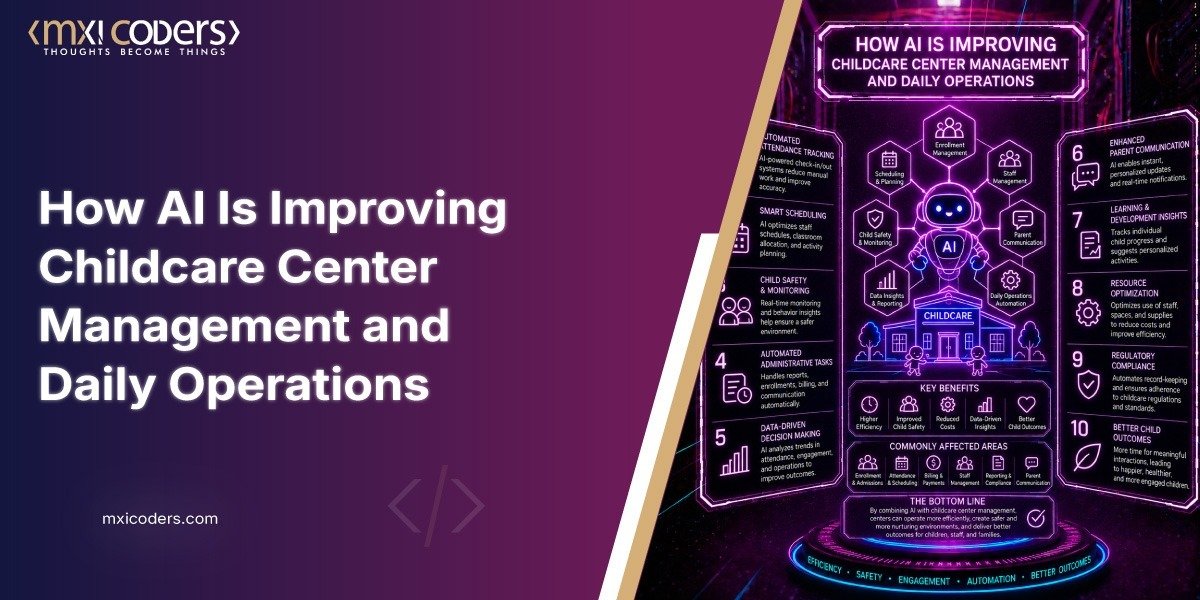
Moreover, childcare centers do much more than manage activities within the classroom. Every day, childcare centers are engaged in taking care of such processes as registration of attendance, teacher scheduling, communication with parents, billing, enrollment of children, and documentation. All this can be automated with the help of artificial intelligencesoft, by managing information structuring, creating reports, and analyzing the necessary information. The Modern Childcare Management Software contains all the features mentioned above, while AI will enable to automate additional data processing. In no case is the intention to replace educators or managers of childcare centers. Quite the opposite: AI needs to automate all the processes without affecting child’s security and privacy.
➤ What Is AI Powered Childcare Software?
Childcare software using AI technology is able to combine the functions of traditional administrative software with those such as analysis of information, detection of patterns, draft creation, and automation of processes.
Traditional software deals with functions such as attendance tracking, billing, enrollment process, communication with parents, and staffing inflexibly. The AI functions could be used for detecting incomplete entries, scheduling of staff, creating a report on classroom activity, or generating a parent’s report.
The software should enable employees to make decisions rather than take away this function.
➤ How Is AI in childcare Improving Daily Operations?
AI mainly helps centers reduce repetitive work, organize information, and respond faster to routine operational needs.
➥ Automated Attendance and Record Management
Digitized attendance records are more searchable. AI can alert us about cases of absent check-ins, duplicates, and incomplete records. Manual intervention will be needed to verify any such anomalies where attendance records are connected to pick-up rights or safety measures.
➥ Smarter Parent Communication
Centers will send notifications about events, meal times, closings, payment, forms, and other activities. AI can generate notifications about those using approved information from centers.
Messages should be reviewed by staff members before being sent, especially in case of health or behavior incidents.
➥ Staff Scheduling and Task Management
AI tools can compare changing schedules and highlight coverage gaps. Administrators can then adjust assignments based on staff qualifications, local staffing rules, and classroom needs. The final staffing decision should remain with the center manager.
➥ Child Development Documentation
The technology can categorize the comments from educators, cluster the information accordingly, or create summaries about activities, achievements, and progress in learning.
AI must not diagnose problems or make educational decisions without the proper human analysis. The context is very important, and the educators know more about the context.
➥ Billing and Administrative Automation
An AI-enabled billing process can help find information gaps, generate reminders, classify documents, and avoid duplication.
However, the financial documents still have to be reviewed where disputes about bills, discounts, subsidies, returns, and family-specific terms arise.
➤ What Are the Key Benefits?
A well-designed AI childcare management software system can reduce routine administrative effort and give staff more time for work that needs human attention.
Common benefits include:
- Less repetitive data entry and record checking
- Faster preparation of routine parent messages
- More organized attendance, billing, and enrollment records
- Better visibility into staffing gaps and daily tasks
- Easier preparation of reports and documentation
The value depends on whether the software solves a real workflow problem. Adding AI to an unclear process can create more work.
➤ What Privacy and Safety Issues Should Childcare Centers Review?
Privacy issues arise because some childcare programs maintain information about the child such as their name, attendance, family information, images, and health information.
According to the United States FTC, there is a COPPA Rule which imposes standards on certain web services regarding the collection of information of minors who are younger than 13 years. UNICEF advises paying attention to the protection of children’s information, safety, transparency, responsibility, and human involvement in AI.
Centers must examine:
- Who is allowed access to each type of record
- Where the data is stored and what protection is applied to it
- If the data is transferred to any third parties or AI vendors
- For how long the records are kept
- How AI-based material is reviewed before usage
NIST’s AI Risk Management Framework also offers a reference for managing AI-related risks across organizations.
➤ How Should a Center Choose the Right Childcare Software?
Look at operational issues, not the AI capabilities first. See where staff are wasting their time, where mistakes occur, and which activities are performed daily.
Is the solution addressing attendance, enrollment, billing, communication with parents, scheduling of staff, reporting, permission levels, and data export? If yes, evaluate the AI capabilities individually. What data do they process, what do they generate, how is their output reviewed, and can the capability be disabled if not appropriate?
Usability is another important factor to consider. The software that needs constant fixes or extensive training may slow your staff down.
➤ Conclusion
AI may organize childcare management through performing repetitive jobs, drafting routine documents, and assisting employees to identify the information that should be addressed. Best applications of the technology include practical implementations like checking attendance, scheduling assistance, billing process, drafts for communication, and documentations.
Successful implementation of the technology requires practical software development, policies for employees, good data security measures, and human oversight. If you need to develop a custom childcare operations platform or another software development project, please contact us at MXIcoders.
➤ Sources Used
- U.S. Federal Trade Commission, Children’s Online Privacy Protection Rule and Children’s Privacy guidance.
- NIST, AI Risk Management Framework.
- UNICEF, AI Strategy 2025-2030 and Guidance on AI and Children.