A contemporary point of sale is not just an order processing device anymore. With AI based POS software, you can automate transactions, analyze sales data, detect low inventory levels, and recommend products that potential buyers will be interested in. All in all, that’s how retailers, restaurant chains, and other businesses make checkouts easier and decisions data driven.
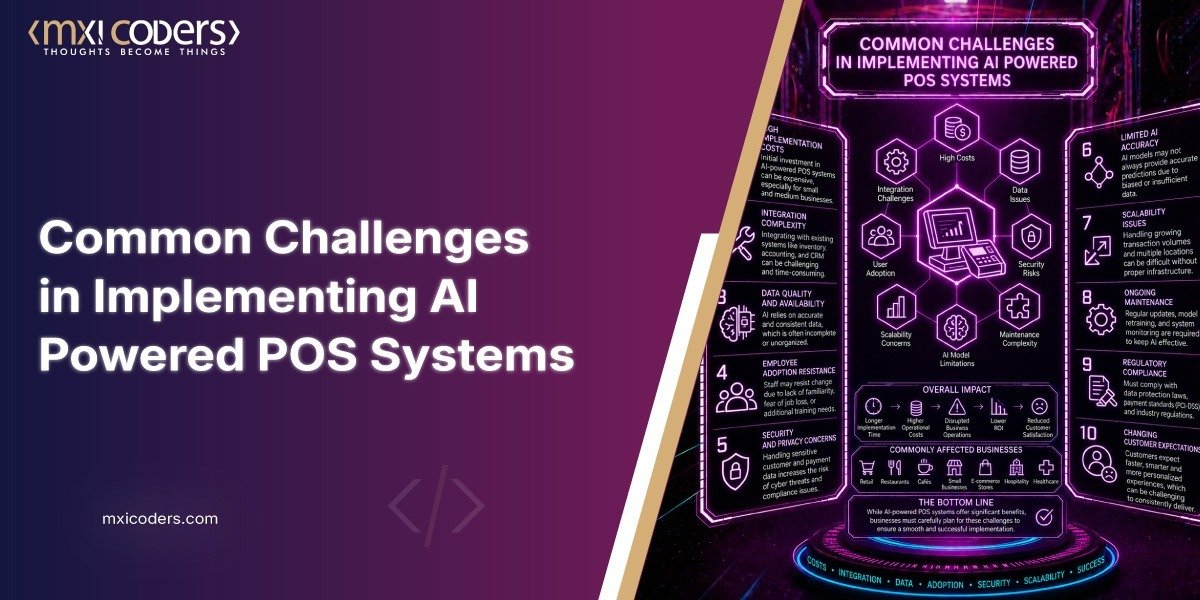
There is no easy way out of it, though. Integration challenges, security risks, growing expenses and employee resistance can impede or stop the process of implementation altogether. Here we provide information about the most typical problems related to the implementation of a POS system and their solutions.
➤ What Are the Common Challenges in Implementing AI Powered POS Systems?
Businesses adopting an AI powered point of sale system commonly face integration difficulties, data privacy concerns, high costs, poor data quality, hardware compatibility issues and employee training gaps. Careful planning, thorough testing and structured staff training can resolve most of these issues before they affect daily sales.
➤ 7 Common Challenges in Implementing AI Powered POS Systems
➥ Integration With Existing Business Systems
Integration with a POS is rare as it is. Integration requires the POS to share data with inventory management systems, accounting software, CRM systems, ERP, and ecommerce. The issues with POS integrations often take the form of data sync issues, duplicate entries, mismatched product codes in various software, and outdated software with no API capabilities.
Opt for a POS that supports integration via an API. Map the data fields in advance and perform end to end testing in a staging environment before go live.
➥ Data Security and Privacy Concerns
The POS system stores the credit card information, customer profile, and transaction history. It makes the POS system an easy target for any attacker. The security of the POS system can be achieved through encryption of data in transit and at rest, role based access control, tokenisation of payment, and compliance with PCI DSS standards.
The introduction of AI increases the responsibilities. The AI models should abide by the privacy laws such as GDPR and Digital Personal Data Protection Act of India. Collect only necessary information that is required by the AI model.
➥ High Implementation and Maintenance Costs
The software licence is just the beginning; hardware improvements, integration, customization, training and support will quickly ramp up the cost.
Compare the total cost of ownership for at least three to five years instead of merely the costs upfront. Begin by implementing features that give you tangible results, such as inventory forecasting, and build on your successes with advanced features.
➥ Poor Data Quality and AI Accuracy
“Data is as good as the AI which uses it.” Inaccurate historical records and duplication in SKU and inconsistency in product categories lead to inaccurate demand forecasting and recommendations. Historical data must be cleaned up and standardized before its importation. The validation should be conducted on a regular basis post migration. Also, keep someone looking at recommendations made by AI for the first few months at least.
➥ Hardware Compatibility and System Performance
It is critical that all the barcode scanners, receipt printers, payment terminals, and cash drawers integrate seamlessly with the updated software. Older equipment might not have the required drivers or certification.
The performance of the POS system is equally important. Any system which becomes slow in a busy period ends up losing money. Test the current hardware, do the load test and ensure that the POS works without an internet connection.
➥ Employee Training and Resistance to Change
Cashiers accustomed to using the former setup could find the new process and AI prompts confusing. Managers must be familiar with the dashboards as well as be able to take actions based on the analysis.
It helps if training is provided ahead of time for the employees and a guide is provided. It is helpful to show how using AI will make their job simpler.
➥ Business Disruption During Implementation
The data migration process, configuration problems, and technical difficulties may disrupt sales. The phased approach will mitigate the risk.
Implement the system in one location initially and conduct testing with live transactions. Schedule the implementation for off peak times and have the existing system available until the new system becomes reliable.
➤ How Can Businesses Overcome AI Powered POS Implementation Challenges?
- Analyze business needs before short listing vendors.
- Check compatibility with existing software and hardware.
- Implement data security and privacy mechanisms from Day One.
- Clean and check your data before the migration.
- Train employees before system implementation.
- Run transactions, integrations, and AI tests under real world scenarios.
- Perform performance monitoring and maintenance post implementation.
➤ What Should Businesses Consider Before Choosing an AI Powered POS System?
- Scalability & integration: Is it scalable for future growth and able to integrate with existing software?
- Features of relevance for AI: Does it solve actual challenges such as prediction, inventory planning, or understanding customers?
- Security & compliance: Is it compliant with PCI DSS requirements?
- Hardware requirements & offline mode capability: Does it run on hardware and supports offline mode?
- Support from vendors: Is there vendor training, updates & maintenance?
- ROI vs Total Cost: Is there enough value for money spent?
➤ Conclusion
AI can make your point of sale fast, efficient and profitable but only if it is done right. Integration planning, good quality data, data security, well prepared staff and testing are what distinguishes successful integration from a costly one. Before you even invest in such a system, you should decide what goals your business is going to accomplish using it.
Looking for planning AI powered POS for your business? Mxicoders provides customization and integration of POS solutions with secure payments, intelligent inventory and integrations with all your business systems.
➤ Sources Used
- PCI DSS payment security standards: PCI Security Standards Council.
- India’s data protection framework: Ministry of Electronics and Information Technology. GDPR data
- protection requirements: European Union: Data protection under GDPR