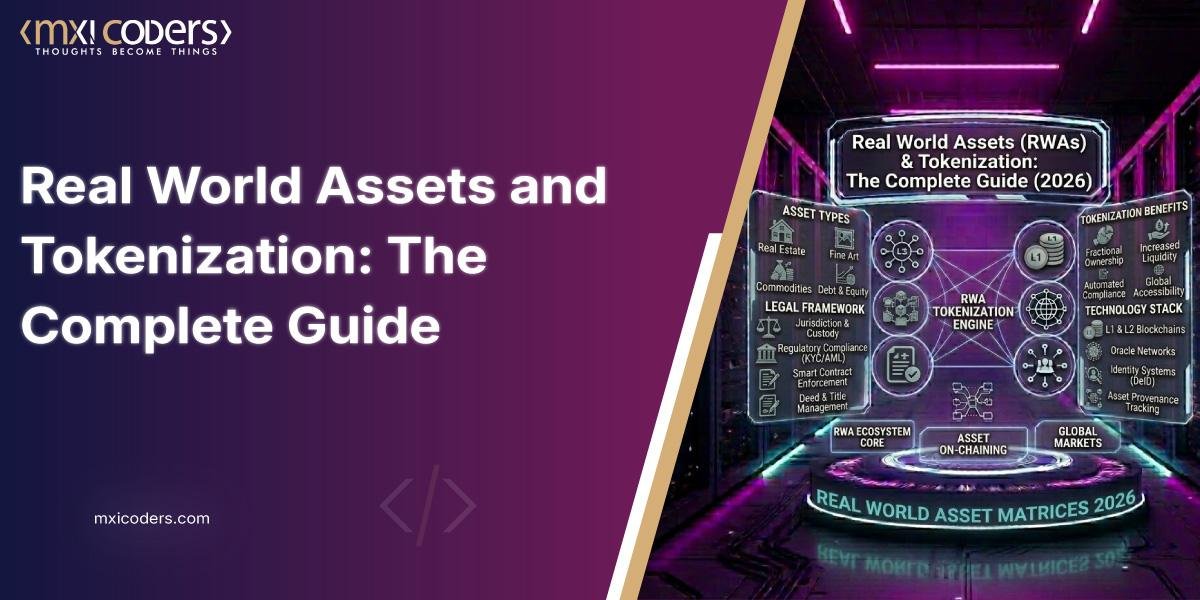
Let’s cut to it. The biggest money sits in slow assets. Real estate, private credit, art, and commodities. They’re worth trillions but move like molasses. Banks, brokers, paperwork. Deals take months. Most people never get in.
RWA tokenization flips that. You take rights to a building, a loan, or gold and turn them into tokens on a blockchain. Those tokens trade 24/7. You raise cash faster. Investors jump in with less money. No gatekeepers taking a cut at every step.
This guide shows how to tokenize an asset, what legal and tech work it takes, and how firms now use tokenization-as-a-service and white-label platforms to go live in days. Not years.
1. Real World Assets (RWAs) Understanding
1.1 What Counts as a Real-World Asset
A real world asset is anything with value outside crypto. Physical or financial. Once tokenized, it’s a digital claim on-chain, backed by legal paperwork that holds up in court.
Types you’ll see:
Physical Assets
Real estate, fine art, gold bars, infrastructure, machinery.
Financial Assets
Private credit, invoices, corporate bonds, fund shares, revenue splits.
Investors buy tokens that map to ownership or cash flows from these asset tokenization deals. Geography stops mattering. A buyer in Mumbai can own part of a Berlin apartment. In minutes.
1.2 Examples of Tokenized RWAs
The market’s already live:
- Fractional real estate sold via digital asset issuance platforms
- Gold-backed tokens you can swap for actual bullion
- Tokenized treasuries and money-market funds that big firms use for yield
- Tokenized private credit funded by global pools
- IP, music rights, and collectibles issued as NFTs or hybrid tokens
More buyers want real yields, not just crypto swings. So these categories keep growing.
2. The RWA Tokenization Process
Tokenizing isn’t just “mint a coin.” You need legal setup, custody, compliance checks, and smart contracts. Skip one and regulators shut you down. Here’s how teams that know how to tokenize real estate actually do it.
2.1 What Tokenization Means
Tokenization turns ownership rights into digital tokens on chains like Ethereum or Polygon. The tokens are programmable. You can bake in who can hold them, when they trade, how dividends pay out, and how redemption works.
Common standards:
- ERC-20 for fungible, fractional pieces
- ERC-1400 for security tokens with transfer rules
- ERC-721 and ERC-1155 are both designed to handle unique or mixed assets, such as brand new digital collectibles like NFT cards or images
2.2 Step-by-Step Tokenization Workflow
1. Legal Structuring and SPV Setup
You create a Special Purpose Vehicle. The SPV holds the asset. Token holders get a claim on the SPV. Lawyers make sure it fits securities laws. Without this, your tokens are just fancy PDFs.
2. Custody and Asset Verification
A regulated custodian or trustee holds the real asset. For real estate, it’s the deed. For gold, it’s the vault. This step builds trust. Investors want proof the token links to something real. Good real world assets custody is non-negotiable.
3. Smart Contract Development
Devs write the token using ERC-20 or ERC-1400. Compliance gets coded in. That means KYC, AML, country blocks, investor caps, dividend logic, and lockups. Many firms grab enterprise tokenization solutions or a white-label platform to ship this fast.
4. Token Issuance and Distribution
Tokens go out through an STO portal or digital asset issuance platform. Investors pass KYC, get tokens, and can trade on compliant secondary markets. This is the part most folks picture when they ask how to build an Asset Tokenization Platform.
5. Ongoing Management and Reporting
You don’t stop at launch. Tokenized assets need pricing updates, reports, payouts, redemptions, and compliance reviews. On-chain tools cut admin time way down.
3. Token Types Used in RWA Projects
Security Tokens
These are regulated investment contracts. Most RWA deals use them. They follow rules from the SEC, MiCA, MAS, or FINMA.
Utility Tokens
Only fit if the token gives access, not ownership. Rare for RWAs.
NFTs and Hybrid Models
Work for collectibles, IP, and assets with both unique and fractional parts.
4. Why RWA Tokenization Matters
4.1 Liquidity That Unlocks Capital
Old assets settle slowly. T+2 if you’re lucky. Tokenized assets trade globally, day and night. Asset owners get capital in days. Investors can exit without waiting on a buyer for months.
4.2 Fractional Ownership
Tokenization slices costly assets into small units. A $20M building becomes 200,000 tokens at $100 each. Retail buyers step in. Asset owners raise funds faster. More people touch markets that blocked them before.
4.3 Transparency and Security
Every transfer hits the blockchain. Investors check holdings on a public ledger. Rules live in the contract. That cuts manual errors and back-office drag.
4.4 Operational Efficiency
Tokenization removes settlement lags and middlemen. Payouts run automatically. Asset owners spend less on admin. Investors get paid without chasing anyone.
Also Read: Real Estate Tokenization Explained: How It Works, ROI, and Compliance Steps
5. Challenges and the Regulatory Landscape
5.1 Regulatory Complexity
Tokenized assets still face securities laws. Accreditation, KYC, AML, transfer limits. Each country writes its own playbook. Firms often hire a tokenization service provider that knows cross-border law.
5.2 Technical Risks
Smart contracts need audits. One bug can drain funds. You also need links to custodians, banks, and oracles for price feeds.
5.3 Valuation and Custody
Tokens must track fair value. You need solid appraisals and trusted custody. Lose the link to the real asset and the token’s worth nothing.
6. Market Outlook and Future Trends
6.1 Institutional Adoption
Big banks now issue tokenized bonds, fund infrastructure, and tokenized treasuries. That’s not hype. It’s a shift in how capital markets run.
6.2 New Asset Classes
Tokenization now covers:
- Carbon credits
- Renewable energy projects
- Managed funds
- Private equity
- Decentralized infrastructure
Both funds and retail want in.
6.3 Convergence of TradFi and DeFi
Tokenization pulls traditional assets into programmable rails. DeFi protocols take tokenized real-world collateral. Banks use on-chain settlement to move faster.
Tokenization Is Reshaping Global Finance
Real World Asset Tokenization tears down walls around access, liquidity, and settlement. Owners raise money quicker. Investors get clear, direct exposure to high-value markets.
Want to tokenize an asset? Need the cost breakdown for RWA tokenization? Thinking of launching a white-label platform? MXI Coders runs full Tokenization as a Service. We handle legal, compliance, smart contracts, and deployment. Often in under a week..
Ready to put slow capital to work?