Digital wallets have become the most widely used mode of making payments online. The Worldpay 2026 Global Payments Report indicates that wallets accounted for 56% of global ecommerce value and 33% of in store value in 2025. In India, UPI based wallets make up 68% of the total value of online transactions and 61% of in store payments.
The increasing use has led to more criminals. Account takeover, phishing, identity theft, and unauthorized transactions target users and payment solutions every single day. Robust digital wallet security becomes crucial for keeping customers loyal to your application.
Fraud detection prevents this type of threat before money is moved out of the account. Below, we will discuss the most frequent types of attacks and technology that protects against them.
➤ What Is Digital Wallet Fraud?
Digital wallet fraud refers to the use of any digital wallet to steal money or make purchases without the owner’s consent. Fraudsters manage to break into the digital wallets using stolen credentials, fooled users, hijacked phone numbers, or infected devices. The fraudsters then proceed to withdraw the balances or link their stolen cards for cashing out.
The effects of such fraud are not only limited to the stolen amount but also include chargebacks, regulatory fines, and support costs for businesses and loss of money and trust from the customers’ side.
➤ Common Types of Digital Wallet Fraud
➥ Account Takeover Attacks
Criminals sign in with stolen login credentials, often bought from old data breaches. Because many people reuse passwords, credential stuffing tools can test thousands of leaked combinations against a wallet’s login page in minutes.
➥ Phishing and Social Engineering
Fake payment notifications, cloned websites and bogus “customer support” messages trick users into sharing their details. In OTP scams, the caller asks for a verification code and uses it to approve a payment.
➥ SIM Swapping Attacks
A fraudster convinces the mobile carrier to move the victim’s number to a new SIM. They then receive every OTP and verification message, which unlocks the wallet.
➥ Identity Theft and Payment Fraud
The stolen data is employed to create spoof wallet accounts or associate hacked credit cards. These accounts will then conduct the fraudulent activities.
➥ Device and Malware-Based Attacks
Malware and hacked phones can scan SMS messages, log keystrokes, and retrieve passwords without users’ knowledge.
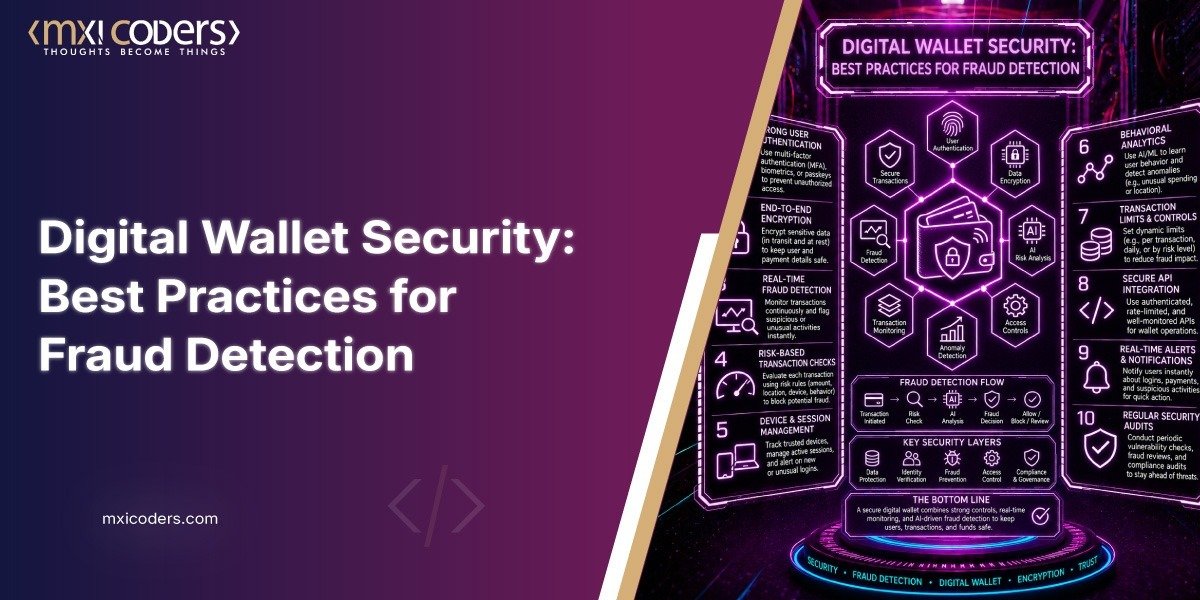
➤ 8 Best Practices for Digital Wallet Security and Fraud Detection
➥ Implement Multi-Factor Authentication (MFA)
Use what the user knows (PIN), has (one time password or registered device), and is (fingerprint). Request additional authentication when performing risky operations like adding a payee or changing the phone number that is associated with the account.
➥ Use AI-Powered Fraud Detection Systems
Machine learning algorithms will monitor all transactions, identify any suspicious transaction pattern, and recognize any activity that deviates from the user’s behavior.
➥ Implement Payment Tokenization and Encryption
Tokenization converts card numbers into random tokens that become useless even if stolen. Encrypt all personal and financial information both in transit and at rest to ensure the safety of card data during the transaction.
➥ Monitor Transactions in Real Time
Monitor transaction frequency, amount, location, and device used. An unexpected surge of high volume transactions from another country must raise an alarm or even stop them.
➥ Apply Biometric Authentication
Fingerprint or facial biometrics bind the access control mechanism to the actual user. Device specific biometrics are also very difficult to phish in comparison with OTP and passwords.
➥ Strengthen Device and Account Security
Connect user’s accounts to trustworthy devices, restrict number of login attempts, and confirm each device when adding new ones. Disallow transactions from rooted and jailbroken phones.
➥ Conduct Regular Security Audits
Perform vulnerability and penetration testing once per year, and each time after updates. Apply patches for all libraries, SDKs, and APIs used.
➥ Educate Users About Digital Payment Scams
Inform your users that your service will not ask about OTP/PIN code. Recommend using strong and unique passwords, enable alert systems for transactions and fraud.
➤ How AI and Machine Learning Improve Digital Wallet Fraud Detection
Rules detect known frauds, but AI detects those that elude rules. Using machine learning algorithms to develop a user’s profile based on normal device usage, location, keystrokes, amount of transactions, etc., unusual activity can be immediately identified.
A prediction model assigns risk scores to all payments. Low risk payments go straightaway, whereas high risk transactions get either stopped automatically or flagged to be reviewed further. Models will keep retraining due to changing fraud patterns, hence they can constantly adapt to changes. In this case, there will be lower amounts of false positives.
➤ Essential Security Features in Digital Wallet App Development
Security works best when it is designed in from the first sprint, not bolted on after launch. A secure wallet should include:
- Secure user authentication with MFA and biometrics
- End to end encryption where appropriate, plus encryption at rest
- Tokenization of all stored payment credentials
- Real time transaction monitoring
- Instant fraud alert notifications for users
- Secure API integration with banks and payment gateways
- Role based access controls for internal teams
- Audit logs and security reporting for investigations and compliance
➤ Regulatory and Compliance Considerations for Digital Wallet Security
Compliance is the benchmark for safeguarding against any breach. The compliance frameworks are:
- PCI DSS: All apps which store, process, or transmit card data should comply with Payment Card Industry Data Security Standard.
- KYC: Identity proof of every customer is required before allowing complete usage of wallet.
- AML: Suspicious transactions are to be monitored for money laundering.
- RBI guidelines (India): According to the “Authentication Mechanisms for Digital Payment Transactions Directions, 2025”, effective from 1st April 2026, two different kinds of factors are needed for authenticating domestic digital payments.
- Data privacy: The Indian issuers should comply with “Digital Personal Data Protection Act, 2023” and foreign apps could come under GDPR.
➤ How to Choose the Right E-Wallet App Development Company
Your development partner also has as much effect on your security as you do yourself. Some of the factors that you should consider when picking an ewallet app development company include:
- Experience in creating financial applications
- Technical knowledge of integrating payment gateways, UPI & digital banking
- Familiarity with anti fraud mechanisms such as AI risk scoring, tokenization and device fingerprinting
- Security testing, PCI DSS, KYC, RBI compliance support
- Scalable architecture with support for maintenance & patching
➤ Conclusion
The nature of fraud methods is dynamic and keeps changing all the time; hence security must always be preventive rather than reactive. Combining MFA/biometrics, tokenization/encryption, real time monitoring/AI based detection methods makes sure that most frauds do not happen at all as funds are not transferred.
Want to develop a payment application? MXICoders provide end to end digital wallet app development with fraud detection, compliance, and maintenance already integrated into the service.