Blockchain

How does Blockchain Verify Transactions?

Ashok Rathod

Tech Consultant

Posted on
8th Oct 2024
5 min
Read
Share

Table of Contents

  • Quick Tips
  • Familiarize yourself with Cash App
  • Enable two-factor authentication
  • Utilize the optional Cash App
  • Conclusion

At its core, blockchain solves one massive problem how to establish trust without intermediaries. Traditionally, we’ve relied on banks, payment processors, or authorities to verify transactions. These centralized systems act as gatekeepers, making sure everything checks out.

But here’s the catch centralization brings risks. Think fraud, delays, high fees, or even system failures.

That’s where blockchain flips the script.

Instead of trusting a single authority, blockchain uses a decentralized network of participants to verify transactions. No middlemen, no blind trust just math, code, and consensus.

👉 Key takeaway: Transaction verification isn’t just a feature it’s the backbone of blockchain technology.

➤ What Is Transaction Verification in Blockchain?

➥ Simple Explanation

In plain English, transaction verification is the process of checking whether a transaction is legitimate before adding it to the blockchain.

It ensures:

  • No one spends money they don’t have
  • Transactions aren’t duplicated
  • Data hasn’t been tampered with

Without verification, the entire system would collapse into chaos.

➥ What Needs to Be Verified?

Before a transaction gets the green light, several things are checked:

  • Sender identity using cryptographic keys
  • Sufficient balance to complete the transaction
  • Transaction authenticity to ensure it’s not forged
  • Network agreement so all participants accept it

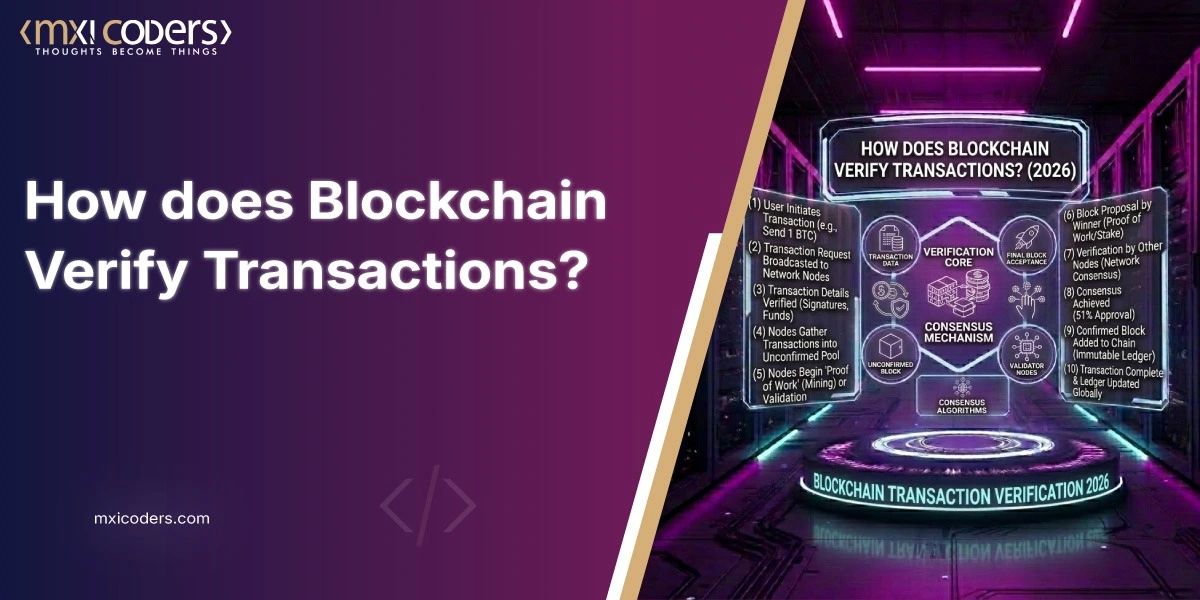
➤ Step-by-Step: How Blockchain Verifies Transactions

Let’s walk through the process step by step no jargon, just clarity.

➥ Step 1: Transaction Creation

Everything starts when a user initiates a transaction through a digital wallet.

This transaction is:

  • Signed using a private key
  • Secured with a digital signature

That signature proves the transaction is genuinely authorized.

➥ Step 2: Broadcast to Network

Once created, the transaction is broadcast to a network of nodes (computers participating in the blockchain).

These nodes:

  • Receive the transaction
  • Store it temporarily in a queue called the mempool

➥ Step 3: Initial Validation

Now comes the first round of checks. Nodes verify:

  • Is the signature valid?
  • Does the sender have enough balance?
  • Does the transaction follow network rules?

If something’s off, the transaction gets rejected immediately.

➥ Step 4: Transaction Pool (Mempool)

Valid transactions don’t go straight into the blockchain. Instead, they wait in the mempool.

Think of it as a waiting room where transactions sit until picked up by validators or miners.

➥ Step 5: Block Formation

Miners or validators group multiple transactions into a block.

Each block contains:

  • A list of transactions
  • A timestamp
  • The hash of the previous block

This linking is what forms the “chain” in blockchain.

➥ Step 6: Consensus Mechanism

Here’s where the magic happens.

The network must agree that the block is valid. This agreement is reached using a consensus mechanism, ensuring:

  • Transactions are legitimate
  • Double spending doesn’t occur
  • Everyone shares the same version of the ledger

➤ Consensus Mechanisms That Verify Transactions

➥ Proof of Work (PoW)

In PoW, miners solve complex mathematical puzzles to validate transactions.

  • Highly secure
  • Requires significant computational power
  • Used by Bitcoin

➥ Proof of Stake (PoS)

Instead of mining, validators “stake” tokens to verify transactions.

  • Faster than PoW
  • Energy-efficient
  • Used by Ethereum 2.0

➥ Other Mechanisms (Briefly)

  • Delegated Proof of Stake (DPoS): Voting-based validation
  • Proof of Authority (PoA): Trusted validators handle verification

➤ Role of Cryptography in Transaction Verification

Cryptography is the engine behind blockchain security.

➥ Public and Private Keys

  • Private key: Used to sign transactions
  • Public key: Used to verify them

It’s like a digital lock-and-key system only the owner can authorize transactions.

➥ Hash Functions

Hashing converts data into a fixed-length string.

Why it matters:

  • Ensures data integrity
  • Even a tiny change creates a completely different hash

➥ Digital Signatures

These prove:

  • Ownership
  • Authorization
  • Data authenticity

No signature? No transaction. Simple as that.

➤ How Blockchain Prevents Double Spending

Double spending is when someone tries to use the same funds twice.

Blockchain prevents this by:

  • Timestamping every transaction
  • Requiring network consensus
  • Recording everything on an immutable ledger

Once a transaction is confirmed, it’s locked in no take-backs.

➤ What Happens After Verification?

Once verified:

  1. The transaction is added to a block
  2. The block is added to the blockchain
  3. The data becomes immutable

As more blocks are added, the transaction gains confirmations, increasing its trust level.

➤ How Long Does Transaction Verification Take?

It depends on several factors:

  • Network congestion
  • Transaction fees (or gas fees)
  • Type of consensus mechanism

Examples:

  • Fast blockchains: a few seconds
  • Bitcoin: around 10 minutes per block

So yeah, patience sometimes pays off.

➤ Advantages of Blockchain Transaction Verification

Why is this system such a big deal?

  • Trustless environment – no middlemen required
  • Transparency – all transactions are visible
  • High security – powered by decentralization
  • Reduced fraud risk – nearly impossible to manipulate

➤ Limitations and Challenges

It’s not all sunshine and rainbows.

  • Scalability issues – networks can get slow
  • High fees during congestion
  • Energy consumption in PoW systems
  • Latency in some blockchains

Still, innovation is closing these gaps fast.

➤ Real-World Examples of Transaction Verification

Blockchain verification isn’t just for crypto anymore.

  • Cryptocurrency transfers like Bitcoin and Ethereum
  • Smart contract execution (often built via a smart contract development service)
  • Supply chain tracking for transparency
  • NFT ownership validation

Businesses looking to scale often hire blockchain developers to build these systems efficiently.

Even fintech startups rely on a cryptocurrency exchange development company to create secure trading platforms powered by transaction verification.

➤ Future of Blockchain Transaction Verification

What’s next? Plenty.

  • Layer 2 scaling solutions for faster processing
  • Improved consensus models
  • AI + blockchain integration
  • Growing enterprise adoption

The goal? Faster, cheaper, and more efficient verification.

➤ Final Thoughts: Why Verification Is the Core of Blockchain

Strip everything else away, and blockchain is really just a verification engine.

Without it:

  • No trust
  • No security
  • No decentralization

Every block, every transaction, every innovation, it all depends on one thing: trustless validation.

So next time you hear about blockchain, remember it’s not just storing data.

It’s constantly proving that data is real.
how does blockchain verify transactions

At its core, blockchain solves one massive problem how to establish trust without intermediaries. Traditionally, we’ve relied on banks, payment processors, or authorities to verify transactions. These centralized systems act as gatekeepers, making sure everything checks out.

But here’s the catch centralization brings risks. Think fraud, delays, high fees, or even system failures.

That’s where blockchain flips the script.

Instead of trusting a single authority, blockchain uses a decentralized network of participants to verify transactions. No middlemen, no blind trust just math, code, and consensus.

👉 Key takeaway: Transaction verification isn’t just a feature it’s the backbone of blockchain technology.

➤ What Is Transaction Verification in Blockchain?

➥ Simple Explanation

In plain English, transaction verification is the process of checking whether a transaction is legitimate before adding it to the blockchain.

It ensures:

  • No one spends money they don’t have
  • Transactions aren’t duplicated
  • Data hasn’t been tampered with

Without verification, the entire system would collapse into chaos.

➥ What Needs to Be Verified?

Before a transaction gets the green light, several things are checked:

  • Sender identity using cryptographic keys
  • Sufficient balance to complete the transaction
  • Transaction authenticity to ensure it’s not forged
  • Network agreement so all participants accept it

➤ Step-by-Step: How Blockchain Verifies Transactions

Let’s walk through the process step by step no jargon, just clarity.

➥ Step 1: Transaction Creation

Everything starts when a user initiates a transaction through a digital wallet.

This transaction is:

  • Signed using a private key
  • Secured with a digital signature

That signature proves the transaction is genuinely authorized.

➥ Step 2: Broadcast to Network

Once created, the transaction is broadcast to a network of nodes (computers participating in the blockchain).

These nodes:

  • Receive the transaction
  • Store it temporarily in a queue called the mempool

➥ Step 3: Initial Validation

Now comes the first round of checks. Nodes verify:

  • Is the signature valid?
  • Does the sender have enough balance?
  • Does the transaction follow network rules?

If something’s off, the transaction gets rejected immediately.

➥ Step 4: Transaction Pool (Mempool)

Valid transactions don’t go straight into the blockchain. Instead, they wait in the mempool.

Think of it as a waiting room where transactions sit until picked up by validators or miners.

➥ Step 5: Block Formation

Miners or validators group multiple transactions into a block.

Each block contains:

  • A list of transactions
  • A timestamp
  • The hash of the previous block

This linking is what forms the “chain” in blockchain.

➥ Step 6: Consensus Mechanism

Here’s where the magic happens.

The network must agree that the block is valid. This agreement is reached using a consensus mechanism, ensuring:

  • Transactions are legitimate
  • Double spending doesn’t occur
  • Everyone shares the same version of the ledger

➤ Consensus Mechanisms That Verify Transactions

➥ Proof of Work (PoW)

In PoW, miners solve complex mathematical puzzles to validate transactions.

  • Highly secure
  • Requires significant computational power
  • Used by Bitcoin

➥ Proof of Stake (PoS)

Instead of mining, validators “stake” tokens to verify transactions.

  • Faster than PoW
  • Energy-efficient
  • Used by Ethereum 2.0

➥ Other Mechanisms (Briefly)

  • Delegated Proof of Stake (DPoS): Voting-based validation
  • Proof of Authority (PoA): Trusted validators handle verification

➤ Role of Cryptography in Transaction Verification

Cryptography is the engine behind blockchain security.

➥ Public and Private Keys

  • Private key: Used to sign transactions
  • Public key: Used to verify them

It’s like a digital lock-and-key system only the owner can authorize transactions.

➥ Hash Functions

Hashing converts data into a fixed-length string.

Why it matters:

  • Ensures data integrity
  • Even a tiny change creates a completely different hash

➥ Digital Signatures

These prove:

  • Ownership
  • Authorization
  • Data authenticity

No signature? No transaction. Simple as that.

➤ How Blockchain Prevents Double Spending

Double spending is when someone tries to use the same funds twice.

Blockchain prevents this by:

  • Timestamping every transaction
  • Requiring network consensus
  • Recording everything on an immutable ledger

Once a transaction is confirmed, it’s locked in no take-backs.

➤ What Happens After Verification?

Once verified:

  1. The transaction is added to a block
  2. The block is added to the blockchain
  3. The data becomes immutable

As more blocks are added, the transaction gains confirmations, increasing its trust level.

➤ How Long Does Transaction Verification Take?

It depends on several factors:

  • Network congestion
  • Transaction fees (or gas fees)
  • Type of consensus mechanism

Examples:

  • Fast blockchains: a few seconds
  • Bitcoin: around 10 minutes per block

So yeah, patience sometimes pays off.

➤ Advantages of Blockchain Transaction Verification

Why is this system such a big deal?

  • Trustless environment – no middlemen required
  • Transparency – all transactions are visible
  • High security – powered by decentralization
  • Reduced fraud risk – nearly impossible to manipulate

➤ Limitations and Challenges

It’s not all sunshine and rainbows.

  • Scalability issues – networks can get slow
  • High fees during congestion
  • Energy consumption in PoW systems
  • Latency in some blockchains

Still, innovation is closing these gaps fast.

➤ Real-World Examples of Transaction Verification

Blockchain verification isn’t just for crypto anymore.

  • Cryptocurrency transfers like Bitcoin and Ethereum
  • Smart contract execution (often built via a smart contract development service)
  • Supply chain tracking for transparency
  • NFT ownership validation

Businesses looking to scale often hire blockchain developers to build these systems efficiently.

Even fintech startups rely on a cryptocurrency exchange development company to create secure trading platforms powered by transaction verification.

➤ Future of Blockchain Transaction Verification

What’s next? Plenty.

  • Layer 2 scaling solutions for faster processing
  • Improved consensus models
  • AI + blockchain integration
  • Growing enterprise adoption

The goal? Faster, cheaper, and more efficient verification.

➤ Final Thoughts: Why Verification Is the Core of Blockchain

Strip everything else away, and blockchain is really just a verification engine.

Without it:

  • No trust
  • No security
  • No decentralization

Every block, every transaction, every innovation, it all depends on one thing: trustless validation.

So next time you hear about blockchain, remember it’s not just storing data.

It’s constantly proving that data is real.

Ready to transform your business with smart software solutions?

Harness the power of custom software development to streamline operations, reduce costs, and boost efficiency. Start by exploring cutting-edge approaches like cloud-native platforms, API-first architecture, and AI-driven automation to future-proof your systems and stay ahead of the competition.

Book free consultation

Let’s build your idea together and serve society.

Author

Ashok Rathod

Tech Consultant

Experience
25 Years
Growth Architect for Startups & SMEs | Blockchain, AI , MVP Development, & Data-Driven Marketing Expert.

Transform the Carbon Credit Industry

Build a Transparent, Scalable Carbon Credit Marketplace with Blockchain.

Index