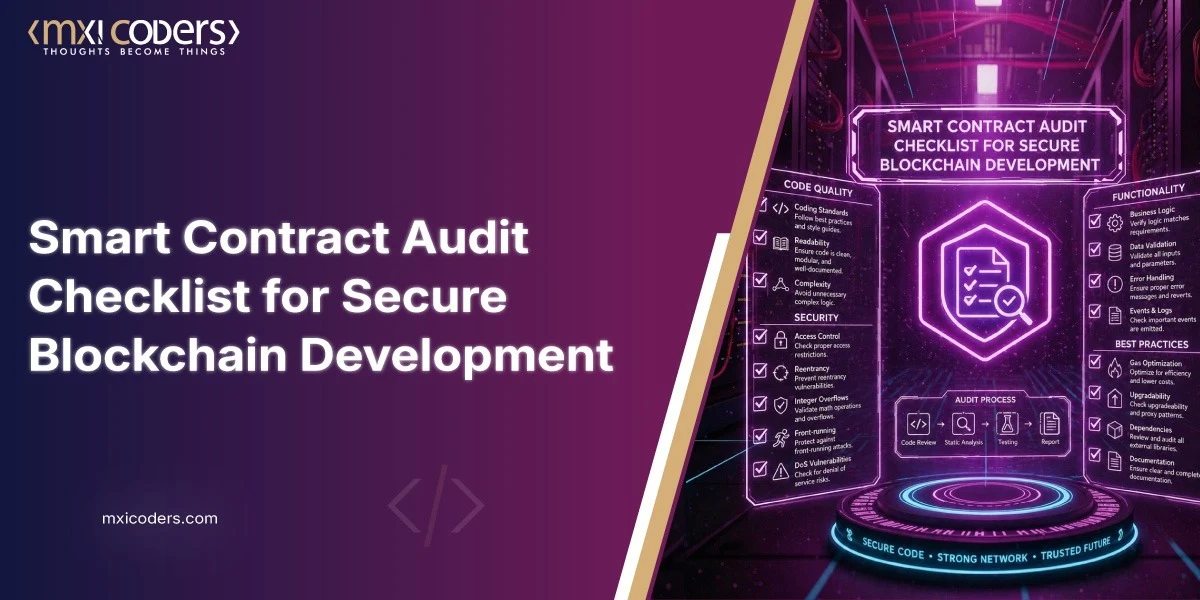
Smart contracts are getting smarter, but hackers are moving even faster. Despite countless audits, exploits still drain millions from DeFi protocols every year. Sounds frustrating, right?
Most smart contracts don’t get hacked because they weren’t audited. They get hacked because the audit wasn’t effective enough. One overlooked vulnerability can cost millions, destroy trust, and, in some cases, end entire projects overnight.
Take real-world incidents like the DAO hack or more recent DeFi exploits. These weren’t just technical failures; they were gaps in process, oversight, and execution.
That’s exactly where this checklist comes in.
This isn’t another theoretical guide stuffed with jargon. It’s a practical, execution-focused smart contract audit checklist for 2026, designed to help developers, founders, and auditors actually prevent exploits, not just detect them.
➣ What Is a Smart Contract Audit
A smart contract audit is a comprehensive review of blockchain code to identify vulnerabilities, inefficiencies, and logic errors before deployment.
But here’s where many get confused:
- Testing checks if your code works as expected
- Auditing checks if your code can be broken
Auditing goes deeper. It evaluates security, economic logic, and attack vectors that typical tests might miss.
➥ Why Audits Fail in Real Projects
Even today, many audits fall short. Why?
- Over-reliance on automated tools: Tools are helpful, but they can’t catch everything, especially complex logic flaws.
- Lack of threat modeling: If you don’t know how attackers think, you’re already behind.
- Ignoring business logic flaws: Some of the worst exploits aren’t technical. They’re economic or structural.
➥ What Makes This 2026 Checklist Different
This checklist stands out because it:
- Focuses on real-world attack scenarios
- Covers pre and post-deployment phases
- Prioritizes exploit prevention over detection
In other words, it’s built for how attacks actually happen today not how we wish they did.
➣ Smart Contract Audit Checklist Overview
Here’s a quick snapshot of the full lifecycle:
- Pre-Development Phase: Planning, threat modeling, architecture
- Development Phase: Secure coding and vulnerability prevention
- Pre-Deployment Audit: Testing, analysis, external reviews
- Post-Deployment Monitoring: Ongoing security and response
Also Read: Top 10 Smart Contract Development Companies in India
➣ Pre-Development Audit Checklist (Before Writing Code)
➥ Define Contract Logic Clearly
Before writing a single line of code, get crystal clear on:
- What the contract is supposed to do
- Key functions and workflows
- User interactions and edge cases
If your logic is vague, your vulnerabilities will be too.
➥ Threat Modeling
Think like an attacker…
- Who might attack your contract?
- What are the possible entry points?
- Where can funds or control be exploited?
Don’t just focus on technical risks, economic exploits (like manipulation of incentives) are just as dangerous.
➥ Choose the Right Standards
Don’t reinvent the wheel. It’s risky and unnecessary.
- Use trusted libraries like OpenZeppelin
- Stick to widely adopted standards (ERC-20, ERC-721, etc.)
Even the best smart contract development company relies on audited frameworks to reduce risk.
➣ Development Phase Checklist (While Writing Smart Contracts)
➥ Code Quality & Standards
Clean code isn’t just pretty. It’s safer.
- Follow Solidity best practices
- Use the latest stable compiler version
- Write clear comments and documentation
Messy code hides vulnerabilities. Simple as that.
➥ Access Control Checks
Access control issues are a common attack vector.
- Implement role-based permissions
- Avoid giving unrestricted admin access
- Use modifiers carefully and consistently
One wrong permission can hand over your entire contract.
➥ Common Vulnerability Checks
Here are the usual suspects you must guard against:
- Reentrancy attacks (think DAO hack)
- Integer overflow/underflow
- Front-running risks
- Denial-of-service (DoS) attacks
Even in 2026, these vulnerabilities still show up often due to oversight.
➥ Gas Optimization Without Breaking Logic
Sure, gas matters but security matters more.
- Avoid unnecessary loops
- Optimize storage usage
- Don’t sacrifice safety for minor gas savings
It’s all about balance.
➣ Pre-Deployment Smart Contract Audit Checklist
➥ Manual Code Review
Nothing beats a human eye.
- Perform line-by-line analysis
- Focus heavily on business logic
- Question assumptions don’t just validate syntax
➥ Automated Testing
Automate as much as you can:
- High unit test coverage
- Edge case testing
- Fuzz testing to simulate unpredictable inputs
➥ Static & Dynamic Analysis Tools
Use tools but don’t depend solely on them.
Popular tools include:
- Slither
- MythX
- Foundry / Hardhat
Each tool catches different issues, so use a combination.
➥ Integration Testing
Your contract doesn’t exist in isolation.
- Test interactions with other contracts
- Validate external dependencies
- Simulate real-world usage scenarios
➥ Third-Party Audit (If Applicable)
Sometimes, you need an outside perspective.
- Hire external auditors before major launches
- Expect detailed reports with vulnerabilities and fixes
- Treat audits as collaboration not just validation
A reliable smart contract development service often includes third-party auditing as a standard step.
➣ Post-Deployment Security Checklist
➥ Monitoring & Alerts
Deployment isn’t the end. It’s just the beginning.
- Track suspicious transactions
- Set up real-time alerts
- Monitor unusual contract behavior
➥ Upgradeability & Patch Strategy
You need a plan for when things go wrong.
- Use proxy patterns for upgradeability
- Implement emergency pause mechanisms
- Define clear patch procedures
➥ Bug Bounty Programs
Turn hackers into allies.
- Incentivize white-hat hackers
- Launch bounty programs on platforms like:
It’s often cheaper to pay a bounty than recover from an exploit.
➣ Most Common Smart Contract Audit Mistakes (That Still Happen in 2026)
Let’s call these out, because they’re still happening:
- Blind trust in audit reports: Audits reduce risk, not eliminate it
- Ignoring economic attack vectors: Code can be perfect and still exploitable
- Poor test coverage: If it’s not tested, it’s broken eventually
- Rushing deployment: Speed kills… especially in blockchai
➣ Security Is a Process, Not a One-Time Task
Here’s the bottom line. Audits don’t guarantee safety.
They’re just one piece of a much bigger puzzle.
Real security comes from:
- Continuous monitoring
- Regular updates
- A proactive security mindset