Are you tired of watching traditional investment options lag behind the rapid evolution of our digital world? Ready to embark on a financial revolution that holds the power to reshape your financial future? Then fasten your seatbelts and get ready to dive into the captivating world of
crypto exchange development – a game-changer that has already captured the attention of savvy investors and tech enthusiasts worldwide. Statistics from Statista about Crypto Exchange Development are eye-opening
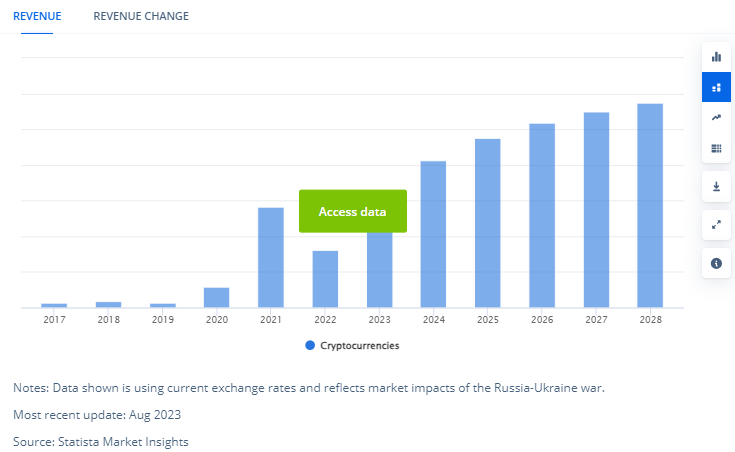
- In 2024, the Cryptocurrencies market is expected to generate US$51.5bn in revenue.
- According to the forecast, total revenue will reach $71.7bn by 2028 based on an annual growth rate of 8.62%.
- Approximately US$61.8 will be generated per digital currency user in 2024 based on current market conditions.
- Based on a comparison of global revenue, the United States is expected to reach the highest revenue in 2024 (US$23,220.00m).
- The number of cryptocurrency users is expected to reach 992.50 million by 2028 in the Cryptocurrencies market.
- A 10.76% penetration rate is expected in 2024, and a 12.39% penetration rate is expected in 2028.
In this blog post, we will unravel the secrets behind this innovative phenomenon, uncovering expert insights that will empower you to make informed decisions, seize untapped opportunities, and embark on a thrilling journey towards financial independence. Brace yourself, because the world of cryptocurrency awaits – and it’s ready to revolutionize your investments like never before.
Benefits of Entering the Crypto Exchange Business
Entering the crypto exchange business can offer numerous potential benefits, making it an attractive venture for entrepreneurs and organizations. Here are some of the key advantages:
Lucrative Revenue Streams
Cryptocurrency trading has gained significant popularity, resulting in substantial trading volumes and transaction fees. By operating a crypto exchange, you can generate revenue from trading fees, withdrawal fees, listing fees, and other related services.
Global Market Reach
The cryptocurrency market operates 24/7, and it has a global user base. Entering this business allows you to tap into a worldwide audience, transcending geographical boundaries and time zones.
Diversification
Diversifying your business portfolio with a crypto exchange can provide stability and growth potential, especially if the traditional markets face economic uncertainties.
Innovative Technology
The crypto industry is at the forefront of technological innovation. Running a crypto exchange exposes you to cutting-edge blockchain technology and fosters a culture of continuous learning and development.
Market Liquidity
As an exchange operator, you can help improve market liquidity for various cryptocurrencies, attracting more traders and investors to your platform.
Economic Inclusion
Cryptocurrencies have the potential to provide financial services to unbanked and underbanked populations globally, contributing to economic inclusion and empowerment.
Portfolio Diversification for Investors
Your exchange can attract investors looking to diversify their portfolios with cryptocurrencies, offering them exposure to digital assets alongside traditional investments.
Token Listings
By listing new and promising cryptocurrencies on your exchange, you can support innovative projects and contribute to the growth of the crypto ecosystem.
Fiat Integration
Many exchanges offer fiat-to-crypto trading pairs, providing users with an easy on-ramp into the world of cryptocurrencies and helping bridge the gap between traditional finance and digital assets.
Brand Visibility
Operating a reputable and secure crypto exchange can enhance your brand’s visibility and credibility in the financial and tech sectors.
Data Insights
The data generated by a crypto exchange can be a valuable resource for analytics, market research, and identifying trends in the cryptocurrency space.
Participation in DeFi and NFT Ecosystems
By integrating with decentralized finance (DeFi) protocols and supporting non-fungible tokens (NFTs), your exchange can tap into the growing decentralized ecosystem.
Resilience to Economic Crises
Cryptocurrencies often serve as a hedge against economic crises and inflation, making your exchange resilient in uncertain economic times.
Monetization of User Data
While respecting privacy regulations, you can monetize user data through targeted advertisements, partnerships, and personalized services.
Community Building
Building a strong and engaged user community around your exchange can foster loyalty and contribute to long-term success. However, it’s essential to keep in mind that the crypto exchange business also comes with challenges and risks.
Key Features of Crypto Exchange Platform Development
Developing a crypto exchange platform requires a comprehensive set of features and functionality to ensure the platform’s security, efficiency, and user-friendliness. Here are the key features and functionalities of a crypto exchange platform:
- User Registration and Authentication – Secure user registration process with email verification and password setup. Two-factor authentication (2FA) for enhanced security.
- User Wallets – Individual cryptocurrency wallets for each user to store and manage their digital assets. Support for multiple cryptocurrencies.
- Trading Engine – Order book management for real-time buy and sell orders. Order matching engine to match buy and sell orders efficiently. Market orders, limit orders, stop-loss orders, and other order types.
- Market Data – Real-time price charts and order book data. Historical price data for analysis. Market depth and liquidity indicators.
- Trading Pairs – Support for a wide range of cryptocurrency trading pairs (e.g., BTC/USD, ETH/BTC). Ability to add and manage new trading pairs.
- Order Management – Order history and transaction history tracking. Cancel and amend orders functionalities. Trading fee calculations.
- Security Measures – Robust security protocols to protect user data and assets. Cold storage for cryptocurrencies to prevent hacks. Regular security audits and vulnerability assessments.
- KYC/AML – Know Your Customer (KYC) and Anti-Money Laundering (AML) verification for user identity verification. Compliance with relevant financial regulations and reporting requirements.
- Deposit and Withdrawal – Deposits and withdrawals of cryptocurrencies and fiat currencies. Integration with payment gateways and banks for fiat transactions.
- User Interface – User-friendly web and mobile interfaces for trading. Responsive design for different devices and screen sizes.
- Admin Dashboard – Administrative tools to manage user accounts, trading pairs, and system settings. Monitoring and reporting of system performance and user activities.
- Liquidity Management – Strategies to maintain adequate liquidity, including market-making and liquidity pools.
- API Integration – RESTful and WebSocket APIs for traders and developers to access market data and execute trades programmatically.
- Multilingual Support – Localization options for a global user base, including language preferences.
- Customer Support – Support ticket system and chat support for user inquiries and issue resolution. Comprehensive FAQ section and user guides.
- Scalability – Architecture designed for scalability to handle increased trading volumes.
- Notifications – Email and SMS notifications for account activity and market alerts.
- Trading Tools – Advanced charting tools with technical analysis indicators. Trading bots and algorithmic trading support.
- Regulatory Compliance – Adherence to relevant laws and regulations in the jurisdictions where the exchange operates. Regularly updated terms of service and privacy policies.
- Reporting and Auditing – Transaction history and statements for tax and accounting purposes. Periodic financial audits and reporting to regulatory authorities.
- Token Listings (Optional) – Ability to list new tokens and coins on the exchange through a review and approval process.
These key features and functionalities are essential for a crypto exchange platform to provide a secure, efficient, and user-friendly trading experience for its users while complying with regulatory requirements and industry best practices.
Select the Correct Technology Stack for Crypto Exchange Development
Building a robust crypto exchange requires a carefully selected technology stack that can handle the complexities of cryptocurrency trading while ensuring security, scalability, and high performance. Here are insights into the technology stack and key components needed for a successful crypto exchange platform:
Blockchain Integration
- Choose a robust and scalable blockchain infrastructure like Ethereum, Binance Smart Chain, or a customized blockchain solution to handle the transaction settlement and management of digital assets.
- Develop smart contracts to automate order execution, trade settlement, and withdrawal processes. Smart contracts ensure transparency and security.
- Run full nodes of the chosen blockchain(s) to validate transactions and maintain network synchronization. This is essential for real-time data updates and wallet balances.
- Implement hot wallets for immediate access to cryptocurrencies needed for trading. These wallets should be well-secured and designed for high-speed transactions.
- Store a significant portion of users’ funds in cold storage, which is offline and less vulnerable to hacking attempts. Cold wallets are used for long-term storage and security.
- Implement multi-signature wallets for added security, requiring multiple private key signatures for transactions.
- Employ robust security measures for private key management, including hardware security modules (HSMs) and secure key storage.
API Connectivity
- Develop a RESTful API to enable traders to access market data, place orders, and manage their accounts programmatically. The API should be well-documented and user-friendly.
- Provide a WebSocket API for real-time market data updates and order book changes. WebSocket connections are ideal for high-frequency trading and live data streaming.
- Implement rate limiting and throttling to prevent abuse and ensure fair usage of the API.
- Use robust authentication methods like API keys and OAuth for secure access control.
Scalability and Performance Optimization
- Design the exchange as a set of microservices that can be independently scaled, that allow for flexibility and improved fault tolerance.
- Implement load balancers to distribute incoming traffic across multiple servers, ensuring high availability and load distribution.
- Utilize caching mechanisms to reduce database load and improve response times for frequently accessed data.
- Choose a high-performance database system (e.g., PostgreSQL, MongoDB) and optimize database queries to handle high transaction volumes efficiently.
- Plan for horizontal scaling by adding more servers or nodes as the user base grows.
- Implement real-time monitoring and analytics tools to track system performance, detect bottlenecks, and address issues promptly.
Scalability and performance optimization are critical to ensure that the exchange can handle surges in trading volume without downtime or delays. Consistently monitoring and optimizing your technology stack will help maintain a reliable and high-performing crypto exchange platform, meeting the demands of users and the crypto market.
Precautions While developing a Crypto Platform
Ensuring the security of user assets and data is paramount in the operation of a crypto exchange. Implementing a robust security framework involves a combination of measures and protocols to protect against hacking, fraud, and cyberattacks while adhering to industry standards and regulations. Here are critical security measures and strategies:
Multi-Layered Authentication
Implement multi-factor authentication (MFA) for user accounts, requiring users to provide something they know (password) and something they have (e.g., a one-time code from a mobile app) to access their accounts.
Encryption
Use strong encryption protocols (e.g., SSL/TLS) to secure data transmission between clients and servers. Employ encryption for sensitive data storage, such as private keys and user information, using industry-standard encryption algorithms.
Cold and Hot Wallet Separation
Keep the majority of user funds in cold storage, which is offline and inaccessible to hackers. Hot wallets should only hold the minimum necessary funds for daily operations.
Regular Security Audits
Conduct periodic security audits and penetration testing by reputable cybersecurity firms to identify vulnerabilities and weaknesses in your system.
DDoS Mitigation
Implement rate limiting to prevent abuse of the system through excessive API requests. Employ DDoS (Distributed Denial of Service) mitigation solutions to protect against attacks that attempt to overwhelm your platform with traffic.
Intrusion Detection and Prevention Systems (IDPS)
Deploy IDPS to monitor network traffic and detect suspicious or unauthorized activity. These systems can automatically respond to threats.
Secure Development Practices
Follow secure coding practices and conduct code reviews to identify and fix vulnerabilities in the software. Stay updated with security patches and updates for all software components.
User Education
Educate users about security best practices, such as enabling 2FA, securing their devices, and recognizing phishing attempts.
Know Your Customer (KYC) and Anti-Money Laundering (AML)
Implement robust KYC and AML procedures to verify the identity of users and monitor for suspicious transactions. Report any suspicious activity to the relevant authorities as required by regulations.
Compliance with Regulations
- Adhere to all applicable financial regulations and cryptocurrency-specific laws in the jurisdictions where you operate.
- Regularly update terms of service and privacy policies to reflect legal requirements and industry standards.
Incident Response Plan
- Develop a detailed incident response plan to address security breaches promptly and effectively.
- Notify affected users and regulatory authorities in case of a data breach.
Employee Training
Train employees on security protocols and best practices, including recognizing social engineering attempts.
Bug Bounty Program
Encourage responsible disclosure of vulnerabilities by running a bug bounty program to incentivize security researchers to report issues.
Secure Vendor Relationships
Ensure third-party vendors and partners also adhere to high-security standards and regularly assess their security practices.
Segregation of Duties
Enforce role-based access control and segregation of duties to prevent unauthorized access to sensitive systems and data. By implementing these security measures, staying vigilant, and continually updating and improving security practices, a crypto exchange can enhance its resilience against threats and provide a secure environment for users while maintaining compliance with industry standards and regulations.
Advantages of Custom & White Label Crypto Exchange Development
Below are some of the advantages of customizing a crypto exchange platform,
- Customization allows businesses to design the user interface, features, and functionalities that align with their brand identity and cater to their target audience’s specific needs.
- It enables businesses to differentiate themselves in a crowded market by offering unique features and services that set them apart from generic exchanges.
- A customized exchange can be built to scale efficiently, accommodating future growth and evolving business requirements without significant disruptions.
- Tailored security measures can be implemented to address specific threats and vulnerabilities, ensuring robust protection of user assets and data.
- Customization allows businesses to adapt to changing regulatory environments and ensure compliance with local and global cryptocurrency regulations.
- By focusing on user experience and feedback, customization can lead to higher user satisfaction and engagement, ultimately driving user retention and loyalty.
Benefits of White Label Solutions
A crypto exchange white label solution refers to a pre-built and fully customizable exchange platform that can be rebranded and deployed by businesses. Here are the benefits of white label solutions:
- Speed to Market – White label solutions significantly reduce the time and resources required to launch a crypto exchange, allowing startups and enterprises to enter the market quickly.
- Cost-Effective – Developing a crypto exchange from scratch can be expensive. White label solutions offer a cost-effective alternative, as the core infrastructure and functionalities are already in place.
- Technical Expertise Not Required – Businesses without in-house technical expertise can leverage the expertise of the white label provider, who has already built and tested the platform.
- Customization – White label solutions are typically highly customizable, allowing businesses to brand the platform, select features, and tailor the user experience to their liking.
- Ongoing Support – White label providers often offer ongoing technical support, updates, and maintenance, freeing businesses from the burden of managing the entire infrastructure themselves.
- Scalability – White label solutions are designed to scale with increasing user demand, ensuring that the exchange can handle growing trading volumes.
Successful Customized White Label Crypto Currency Platforms
BinanceBinance, one of the world’s largest cryptocurrency exchanges, offers a highly customizable trading platform with a range of features, including spot trading, futures trading, and staking. Binance’s success is partly attributed to its ability to cater to the specific needs of its diverse user base.
KrakenKraken, a well-established cryptocurrency exchange, offers a customizable trading experience with advanced trading tools, features like margin trading and futures, and various order types. Kraken’s customization options have made it popular among both retail and institutional traders.
AlphaPoint AlphaPoint provides white label cryptocurrency exchange solutions that have been adopted by various businesses and institutions globally. Their platform allows clients to customize branding, select supported cryptocurrencies, and implement tailored features.
SaaS Platforms Several SaaS (Software as a Service) providers offer white label crypto exchange solutions that can be quickly deployed by startups and enterprises. These solutions often come with customizable templates, APIs, and support services. Customized white label Crypto Currency Development solutions offer viable paths to launching and operating a cryptocurrency exchange, depending on the specific business goals, resources, and technical expertise of the entity involved. Successful implementations are those that align with the business’s objectives and effectively cater to the needs of its users.
How to Choose the Right Partner to Develop a Successful Crypto Exchange Platform?
Selecting the right development partner is crucial in creating a successful crypto exchange platform. It can significantly impact the quality, security, and user experience of your exchange. Here are key factors to consider when choosing your development partner:
Expertise in Blockchain Technology Look for a
partner with a proven track record in blockchain technology. They should have experience in developing similar platforms and a deep understanding of the nuances of cryptocurrency transactions.
Security Proficiency Security is paramount in the crypto world. Your partner should prioritize robust security measures, including encryption, two-factor authentication, and regular security audits to protect against cyber threats.
Regulatory Compliance Ensure that your partner is knowledgeable about the regulatory environment of cryptocurrencies and can build a platform compliant with global and local regulations.
Customization Capabilities Your platform should stand out in the market. Choose a partner who can offer high levels of customization, enabling you to tailor the user experience and functionality to your specific needs.
Scalability and Performance As your user base grows, your platform needs to scale efficiently. Your development partner should use modern, scalable technologies to ensure smooth performance under varying loads.
User Experience (UX) Design The user interface is a critical component of your platform. Select a partner who excels in creating intuitive, user-friendly designs that cater to both novice and experienced users.
Post-Launch Support Development doesn’t end at launch. Opt for a partner who offers
reliable post-launch support, including updates, bug fixes, and user support services.
Cost-Effectiveness While cost shouldn’t be the only factor, it’s essential to balance quality with budget. Seek transparent pricing models and ensure you’re getting good value for your investment.
Client Testimonials Look at their past projects and client testimonials, which can give you insights into their working style, reliability, and the success of their previous ventures.
Communication A successful project requires seamless communication, ensuring your partner is collaborative and maintains open lines of communication throughout the development process. By carefully considering these factors, you can choose a blockchain development partner that not only meets your current requirements but also supports your long-term goals in the dynamic world of cryptocurrency exchange platforms.
Concluding Now,
Overall, the world of investments is on the brink of a technological revolution, and crypto exchange development is at the forefront of this transformation. By embracing cryptocurrencies and the decentralized nature of blockchain technology, investors can break free from traditional financial systems and tap into an unprecedented realm of possibilities. The potential for exponential gains, global accessibility, and enhanced security is beyond comprehension. So, are you ready to challenge the status quo and seize the opportunity to revolutionize your investments? Change awaits, and the time to embark on this crypto journey is now. Let us together reshape the future of finance and unlock a world of unimaginable possibilities.